Whole-Home Water Filtration in Phoenix: Catalytic Carbon, Sizing, and Filter Life
Phoenix Water Services uses chloramine as its disinfectant. That single detail changes which carbon filter actually works at the main line. This guide covers catalytic vs standard GAC, flow-rate sizing, filter life at Arizona usage rates, and how to pair a carbon filter with a water softener.
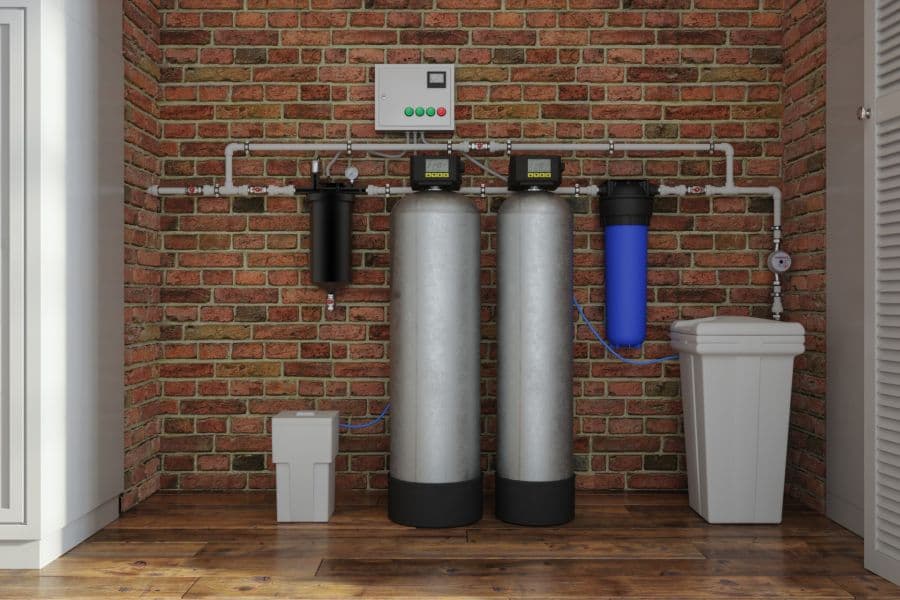
Whole-home water filtration in Phoenix typically means a catalytic granular activated carbon filter on the main supply line, upstream of every tap and shower in the house. That single system removes chloramine, volatile organic compounds, and disinfection byproducts throughout the home. It does not soften the water or remove dissolved minerals. Phoenix Water Services uses chloramine as its primary disinfectant rather than free chlorine, a detail documented at phoenix.gov/waterservices. This distinction determines which type of carbon filter actually works. Standard granular activated carbon reduces free chlorine efficiently but leaves chloramine largely untouched. Catalytic carbon, manufactured by steam-treating standard GAC at elevated temperatures, breaks chloramine down through a surface-catalyzed reaction. For Phoenix homes, standard carbon is not the correct choice at the main line. Sizing the filter to your household flow rate determines contact time with the carbon bed and how long each filter lasts. Phoenix water at 12 to 22 grains per gallon hardness also contains scaling minerals the carbon filter cannot address. Pairing catalytic carbon with a water softener downstream is the complete solution for Phoenix conditions.
What does a whole-home water filtration system do in Phoenix?
A whole-home water filtration system installs at the main supply line inside the house, before the line branches to individual fixtures. Every gallon of water that enters the home passes through the filter before reaching any tap, shower, washing machine, or water heater. The primary contaminants a catalytic carbon system addresses in Phoenix are chloramine, disinfection byproducts such as trihalomethanes and haloacetic acids, and volatile organic compounds.
Chloramine is the disinfectant Phoenix Water Services adds to the distribution system after treatment at the water treatment facilities. Unlike free chlorine, which dissipates relatively quickly in the distribution pipes, chloramine is a more stable compound that travels farther without losing disinfection effectiveness. That stability benefits the utility: disinfectant remains active when it reaches distant neighborhoods. For homeowners, it means chloramine arrives at the tap still present and requires a specific filter media for effective removal.
Disinfection byproducts form when chloramine or chlorine reacts with naturally occurring organic matter in source water. Phoenix source water, drawn partly from the Colorado River via the Central Arizona Project canal system and partly from local groundwater wells, carries organic matter that contributes to disinfection byproduct formation. The EPA regulates disinfection byproduct levels under the Stage 2 Disinfectants and Disinfection Byproducts Rule, documented at epa.gov/dwreginfo. Phoenix Water Services publishes its annual disinfection byproduct measurements in the Consumer Confidence Report, available at phoenix.gov/waterservices. A catalytic carbon filter at the main line reduces trihalomethane and haloacetic acid concentrations at every household tap.
Catalytic carbon vs standard GAC: what Phoenix water requires
The difference between catalytic carbon and standard granular activated carbon is most relevant in Phoenix because of the chloramine disinfection practice. Standard GAC works primarily by adsorption: contaminants adsorb onto the extensive internal surface area of the carbon granules and remain trapped while the treated water continues downstream. This mechanism works well for free chlorine, volatile organic compounds, and taste and odor compounds. For chloramine removal, adsorption alone is not adequate at typical residential flow rates.
Catalytic carbon undergoes an additional manufacturing step beyond standard GAC production. Standard carbon precursor material is steam-activated at temperatures above 800 degrees Celsius to create the porous microstructure that gives GAC its large internal surface area. Catalytic carbon is then further treated at elevated temperatures in a controlled atmosphere to modify the surface chemistry of the carbon, creating active surface sites. When chloramine contacts these modified surface sites, it dissociates chemically rather than simply adsorbing intact. The Water Quality Association documents this distinction between adsorption and catalytic reaction at wqa.org in its water treatment technology reference materials.
In practice, the implication for Phoenix homeowners is direct: specify catalytic carbon when purchasing a whole-home filtration system. Systems sold with standard GAC media labeled for chlorine removal will underperform on Phoenix water because standard GAC is not the right media type for the primary disinfectant actually present. Ask the installer or supplier for the media specification sheet and confirm the media type before committing to a system.
How to size a whole-home carbon filter for a Phoenix home
Correct sizing determines whether the filter removes chloramine at all flow rates or only during periods of low demand. The key parameter is empty bed contact time, often abbreviated EBCT. EBCT is the calculated time the water spends in contact with the carbon media as it flows through the tank. For chloramine removal, a minimum EBCT of 4 to 6 minutes is the standard target in the water treatment industry, with some applications targeting up to 10 minutes for higher performance margins. At a higher household flow rate, water moves faster through the same bed volume, reducing EBCT and chloramine removal efficiency.
To calculate the tank size your household requires, start with your peak service flow rate. A standard residential estimate is 2 to 3 gallons per minute per bathroom, with additional flow for appliances such as washing machines, dishwashers, and refrigerator ice makers. A three-bathroom Phoenix home with typical appliances has a peak demand in the range of 10 to 15 gallons per minute. The media volume needed to achieve 4 to 6 minutes of EBCT at that peak flow is the sizing input for tank specification.
Tank geometry also affects performance. Taller tanks with a smaller diameter create a longer flow path through the media and generally produce better contact time than short, wide tanks at the same media volume. A 13 by 54 inch tank with 1.5 cubic feet of catalytic media suits a small one or two-bathroom home at moderate flow rates. A 20 by 60 inch tank with 3 to 4 cubic feet handles a three or four-bathroom home drawing peak flows in the 12 to 18 gallon-per-minute range. These are common configurations; your installer should perform the EBCT calculation using measured peak flow data for your specific home rather than a generic sizing table.
How long does a whole-home carbon filter last at Phoenix usage rates?
Catalytic carbon media has a finite service capacity measured in gallons processed and contaminant contact hours. At some point, the active surface sites become saturated and the filter stops removing chloramine effectively. In Phoenix, two factors accelerate media exhaustion relative to national average estimates: the relatively high chloramine concentration in the distribution system and above-average household water consumption in a desert climate where outdoor irrigation, pools, and evaporative coolers add to domestic use.
Under typical Phoenix residential use, a properly sized catalytic carbon system with 3 to 4 cubic feet of media will perform effectively for 5 to 7 years before media replacement is warranted. Systems that are undersized for the household flow rate, or households with unusually high water consumption, may see that service interval shortened to 3 to 5 years. Annual testing with a chloramine test kit, available at local pool supply retailers, provides a simple performance check throughout the system's life.
Media replacement is a service call rather than a full system replacement. The tank and plumbing connections remain in place. The old media is removed and new catalytic carbon is loaded, followed by a backwash sequence to classify the media bed before the system returns to service. Scheduling media replacement before the filter reaches exhaustion avoids the period of chloramine breakthrough that occurs when an exhausted filter continues operating past its service life.
Chloramine vs free chlorine: why the distinction matters for Phoenix homeowners
Phoenix homeowners researching whole-home filtration will encounter carbon filter products marketed for chlorine removal without specific mention of chloramine. The terminology matters. Free chlorine and chloramine require different filter media and different contact times for effective removal. Installing a free-chlorine-rated system on Phoenix water, which uses chloramine, produces a filter that removes some contaminants but largely fails to address the primary disinfectant compound actually present.
Several practical effects of chloramine exposure in the home include a persistent chemical odor in shower steam, and eye and skin irritation that some individuals notice at typical municipal chloramine concentrations. Unlike free chlorine, chloramine does not off-gas readily from a glass of water left sitting on the counter. Leaving Phoenix tap water out overnight to remove chloramine, a technique that works for free chlorine in many cities, is largely ineffective here. Phoenix Water Services documents its chloramine disinfection process at phoenix.gov/waterservices and the EPA maintains guidance on chloramine in drinking water at epa.gov/dwreginfo/chloramines-drinking-water.
One additional consideration applies specifically to aquarium owners and home dialysis patients. Chloramine does not neutralize with sodium thiosulfate, the dechlorination compound commonly used to prepare tap water for fish tanks. Aquarium owners in Phoenix who have been using sodium thiosulfate to condition tap water may have been adding chloramine-containing water to their tanks without realizing the dechlorinator was not effective against the actual compound present. Catalytic carbon filtration upstream of the tap resolves this. Home dialysis patients should consult their care team regarding water treatment requirements specific to their medical equipment and the Phoenix water supply.
What a whole-home carbon filter removes and what it does not
Understanding the scope of whole-home carbon filtration prevents the common expectation gap of relying on it to solve problems it was not designed to address.
- Removes: chloramine at all household taps and showers when catalytic carbon is specified and the system is correctly sized
- Removes: free chlorine and chlorine-related compounds beyond the primary disinfectant
- Reduces: trihalomethanes and haloacetic acids, the disinfection byproducts regulated under EPA Stage 2 DBPR at epa.gov/dwreginfo
- Reduces: many volatile organic compounds including benzene and toluene at concentrations found in municipal water
- Reduces: some pesticides and herbicides, depending on molecular weight and polarity
- Does not remove: hardness minerals (calcium, magnesium); an ion exchange water softener is required for hardness reduction
- Does not remove: total dissolved solids; reverse osmosis is required for TDS reduction
- Does not remove: PFAS at the level reverse osmosis achieves; RO at the kitchen tap is the appropriate point-of-use solution for PFAS reduction
- Does not remove: nitrates, arsenic, or fluoride; these require specific media or RO
- Does not remove: bacteria, viruses, or cysts; UV or ultrafiltration is the appropriate technology for microbiological treatment
For a Phoenix household on City of Phoenix municipal water with documented chloramine, 12 to 22 GPG hardness, and periodic PFAS monitoring results, the practical configuration that addresses what the water quality data shows is: catalytic carbon at the main line for chloramine and disinfection byproducts, an ion exchange water softener downstream for hardness, and a reverse osmosis system at the kitchen for PFAS, dissolved solids, and drinking water quality.
How to pair a whole-home carbon filter with a water softener in Phoenix
The correct installation sequence puts the catalytic carbon filter upstream of the water softener on the main supply line. Placing carbon filtration before the softener protects the softener's ion exchange resin from chloramine exposure. Chloramine in prolonged contact with ion exchange resin beads causes oxidative degradation over time, reducing the resin's exchange capacity and shortening its service life. A catalytic carbon block upstream removes chloramine before it reaches the resin. The Water Quality Association documents this degradation mechanism at wqa.org in its softener technology reference materials.
The standard main-line installation sequence from the point of entry into the house is: main shutoff valve, whole-home sediment pre-filter at 5 to 20 micron to protect the carbon bed from particulates, catalytic carbon filter, then water softener. The reverse osmosis system installs at the kitchen sink on a separate branch downstream of the softener. This configuration delivers chloramine-free water at every tap and shower, softened water throughout the house, and further purified water at the kitchen for drinking and cooking.
The carbon filter requires a backwash valve and drain connection. The backwash cycle typically runs every three to seven days, using 25 to 50 gallons of water to reclassify the media bed and flush captured particulates to drain. Modern control heads allow scheduling the backwash during overnight hours to avoid interrupting household water pressure. The carbon filter backwash cycle and the water softener regeneration cycle should be programmed to run at offset times so that both systems are not simultaneously drawing water from the main line.
Frequently asked questions
- What type of carbon filter works for Phoenix water?
- Phoenix Water Services uses chloramine as its disinfectant, not free chlorine. Standard granular activated carbon removes free chlorine but has limited effectiveness against chloramine. Catalytic carbon, a form of GAC that has been steam-treated to increase surface reactivity, breaks down chloramine through a catalytic reaction. For a Phoenix main-line filter, catalytic carbon is the correct choice. Standard GAC underperforms at the chloramine concentrations present in Phoenix municipal water.
- What size whole-home water filter do I need for a Phoenix home?
- Filter sizing depends on your household peak flow rate and the carbon bed volume needed to achieve adequate contact time. The standard target for chloramine removal is 4 to 6 minutes of empty bed contact time. A three-bathroom Phoenix home drawing a peak flow of 12 to 15 gallons per minute typically requires a 20 by 60 inch tank with 3 to 4 cubic feet of catalytic media. An undersized filter reduces contact time and allows chloramine to pass through the bed without reacting with the carbon surface.
- How often does a whole-home carbon filter need replacing in Phoenix?
- Catalytic carbon media in a properly sized Phoenix system typically lasts 5 to 7 years under normal household use. Phoenix water carries higher chloramine contact hours than many markets because of its use as the primary disinfectant. Test the outlet water annually with a chloramine test kit available at pool supply retailers. When outlet chloramine readings rise above your baseline, it is time to schedule media replacement. Media replacement is a service call; the tank and plumbing connections remain in place.
- Does a whole-home carbon filter remove PFAS from Phoenix water?
- A catalytic carbon filter at the main line reduces some PFAS concentrations but does not achieve the near-complete removal that reverse osmosis delivers at the kitchen tap. The EPA's 2024 enforceable limits for PFOA and PFOS at 4 parts per trillion make kitchen-point RO the preferred solution for drinking water PFAS reduction, as RO membranes achieve greater than 95 percent reduction. A whole-home carbon filter handles chloramine and disinfection byproducts at every tap and shower; a kitchen RO system addresses PFAS and dissolved solids at the point of use.
- Can I install a whole-home water filter without a water softener in Phoenix?
- Yes, but the two systems address different problems. A catalytic carbon filter removes chloramine and organic compounds but does not reduce hardness minerals. Phoenix water at 12 to 22 grains per gallon will continue to scale fixtures and appliances if no softener is paired with the carbon filter. For households primarily concerned about chloramine in showers and cooking water, a standalone carbon filter is a reasonable first step. To address both the hardness and the chloramine problems, a carbon filter upstream of a water softener is the standard configuration.