Water Filtration for New Construction in Phoenix: What to Install Before Moving In
New Phoenix homes ship with builder-grade plumbing and no water treatment. Here is the right system, the right sequence, and the right time to install it.
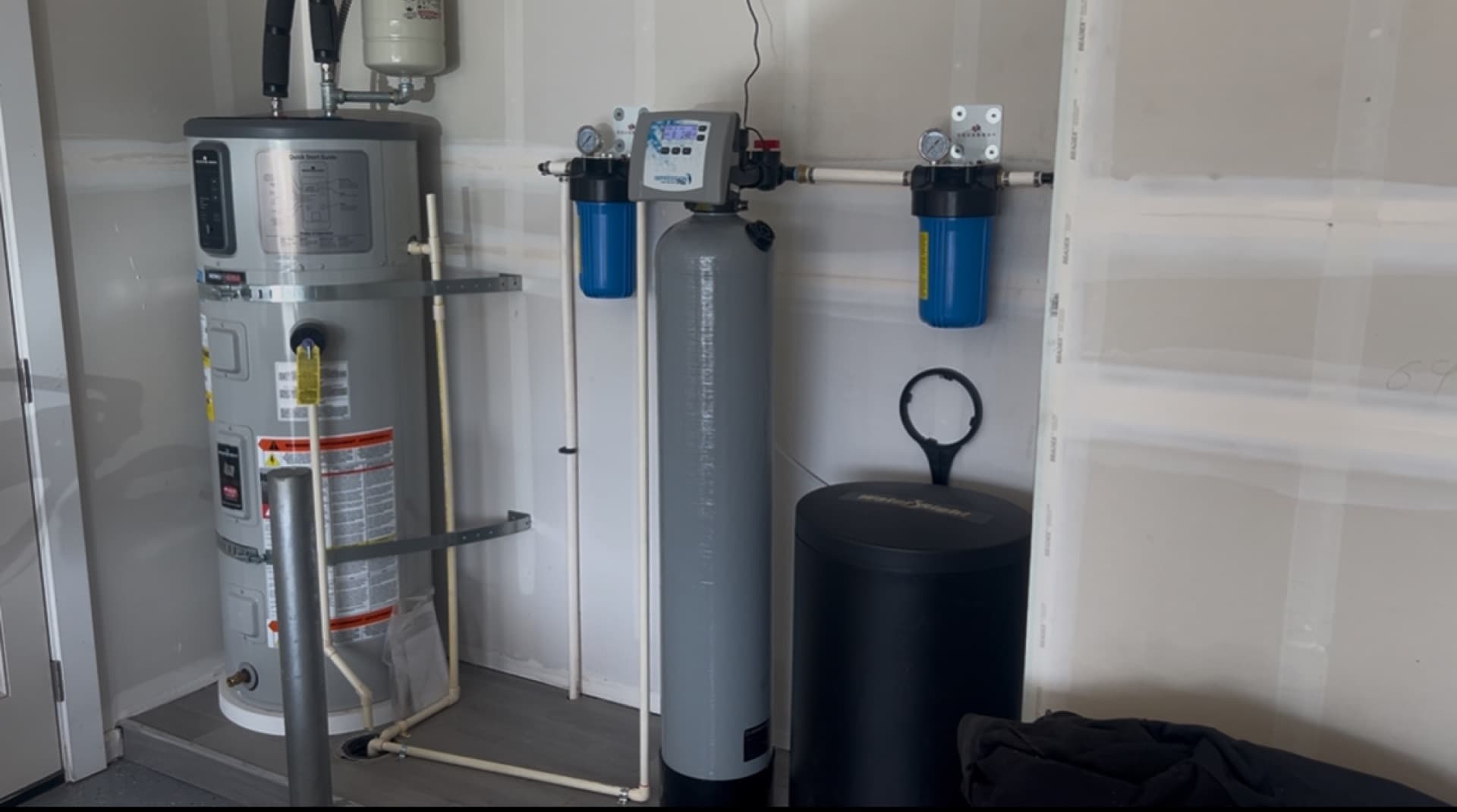
New construction homes in Phoenix arrive with fresh plumbing, clean tanks, and untouched water heaters. What they do not arrive with is any water treatment. Phoenix builders meet building code requirements, which do not mandate water softeners, carbon filters, or reverse osmosis systems. The water entering a brand-new home in Goodyear, Queen Creek, Surprise, or any Phoenix metro community is the same 12 to 22 grain per gallon water entering a home built in 1985. The pipes are new. The water is the same. Without treatment from the first day of use, the scale accumulation timeline starts immediately. A water heater that runs its first heating cycle on untreated Phoenix water begins building scale deposits with that first heat exchange. Scale accumulation from day one is harder to stop later than simply preventing it before the first use. This guide covers the right system, the right installation sequence, and the right time to act in a new Phoenix build.
Do new construction homes in Phoenix need a water softener?
Yes. The water hardness level does not change because the home is new. Phoenix metro water runs 12 to 22 GPG depending on the municipality and specific supply zone. New construction in Goodyear on City of Goodyear supply typically receives 15 to 19 GPG water. New construction in Peoria on groundwater-heavy zones can see 20 to 24 GPG. Neither is soft water regardless of how new the pipes are.
The argument sometimes made for waiting on a softener in a new home is that the plumbing is already clean. That is true. The counterargument is that the cleanliness of the plumbing is temporary in Phoenix water. Scale accumulates in the water heater on the first heating cycle. Within six months, a new tank water heater has a measurable scale layer at the element. Within two years, the scale layer is thick enough to affect efficiency. Installing a softener before that accumulation starts protects the warranty clock and the appliance life from the first gallon through the system.
What is the best time to install water filtration in a new Phoenix home?
Before move-in is optimal. Many new build communities in the Phoenix metro, particularly developments in Goodyear, Queen Creek, Surprise, and Gilbert, include a pre-plumbed softener loop in the garage as a builder option. The loop is a bypass fitting on the main supply line with inlet and outlet ports sized for a softener connection. When this loop is already in place, a softener installation takes two to three hours with no supply line cutting required.
Ask your builder or your building superintendent whether the softener loop is pre-plumbed before you close. If it is there, schedule the water treatment installation to complete before the final walkthrough so the home starts its life with soft water. If no loop is pre-plumbed, plan for a half-day installation that includes roughing in the bypass. Either way, installing before the first occupancy is the right window. Waiting until the first scale complaint adds months of unprotected water heater and dishwasher use.
What does a builder-grade water treatment system leave out?
Most Phoenix area builders include only the minimum required by code. Building code in Arizona does not mandate water softeners, carbon filters, or reverse osmosis systems for residential construction. Some builders include a whole-home sediment filter as a standard feature. Some builders include the pre-plumbed softener loop as an option or a standard. Most builders include nothing beyond the required plumbing connections.
The builder's water treatment decision is not a statement about water quality. It is a cost-per-square-foot decision. Adding a softener and carbon filter to a production home increases the build cost by $1,500 to $3,000. Most production builders do not include it in their base pricing. Some offer it as an upgrade. If the upgrade was not taken, you are starting with untreated water from the first day of occupancy.
What water filtration system is best for a new Phoenix home?
The standard three-piece install for a new Phoenix home is a catalytic carbon block at the main supply line, an ion exchange softener on the supply, and a four-stage reverse osmosis system under the kitchen sink with a line to the refrigerator. That combination handles every documented water quality concern in the Phoenix Water Quality Report: chloramine at the shower and whole-home fixtures, hardness at every appliance and tap, and PFAS plus arsenic plus dissolved solids at the kitchen drinking tap.
- Catalytic carbon block at the main line: removes chlorine, chloramine, taste, and odor before the water reaches anything
- Ion exchange softener on the supply: removes calcium and magnesium, protects every appliance from scale accumulation
- Reverse osmosis under the kitchen sink: removes PFAS, arsenic, fluoride, dissolved solids at the drinking tap and refrigerator
- UV on the main line after carbon and softener: required for private well builds, optional enhancement for municipal supply
The sequence matters. Carbon goes in first to protect the softener resin from chloramine degradation. Softener goes second to protect the RO membrane from hardness fouling. RO goes last at the point of use. Installing in any other sequence reduces the effectiveness of each downstream component.
How much does water filtration cost for a new Phoenix home?
A whole-home carbon plus softener installation in a new build with a pre-plumbed softener loop runs $3,200 to $4,800. Without a pre-plumbed loop, add $800 to $3,500 for the bypass rough-in. Adding a reverse osmosis system under the kitchen brings the total to $4,000 to $7,000 depending on system tier and options. Verify current pricing at the time of your installation, as material and labor costs fluctuate.
Financing is available on full system installs. A $5,000 system financed over 24 months at a promotional rate is approximately $208 per month. The comparison is a water heater replacement at year seven that a softener would have prevented, running $1,800 to $3,200, plus the ongoing soap and appliance savings described in our cost analysis. Most Phoenix homeowners see full payback within three to five years.
What new construction communities in Phoenix should prioritize water treatment?
Every new construction home in the Phoenix metro area benefits from water treatment at move-in due to the regional water profile. Communities in Goodyear, Queen Creek, Surprise, and Peoria are on supplies with hardness at the higher end of the metro range, typically 18 to 24 GPG. Homes in these corridors are at the most acute risk of early water heater failure and significant scale accumulation on dishwashers and tankless heaters.
Cave Creek and Paradise Valley builds that include private wells need a full treatment train: air injection oxidizer if iron is present, sediment filter, catalytic carbon, softener, RO, and UV. The well test is the starting point. We provide a free well test on site and build the equipment recommendation from those numbers, not from a generic specification.
Frequently asked questions
- Do new construction homes in Phoenix need a water softener?
- Yes. New construction does not change the Phoenix water supply entering the home. Phoenix water runs 12 to 22 grains per gallon, and a new water heater, dishwasher, or tankless unit begins accumulating scale immediately on first use. The pipes are new but the water is the same. Installing a softener before move-in prevents scale from the first gallon through the system.
- When is the best time to install water filtration in a new Phoenix home?
- Before move-in is ideal. Many new-build communities in the Phoenix area, particularly in Goodyear, Queen Creek, and Surprise, have softener loop pre-plumbed in the garage by the builder. If the loop is there, a softener installation takes two to three hours and avoids any supply line cutting. Installing before the water heater runs its first heating cycle prevents the initial scale accumulation that some homeowners never fully recover from.
- What does a builder-grade water treatment system leave out?
- Most builders in Phoenix do not install any water treatment beyond a basic whole-home sediment filter, if that. The builder's responsibility ends at meeting building code. Code does not require water softeners or carbon filtration. The softener loop pre-plumb is optional and builder-specific. Some builders include it; most do not.
- What water filtration system is best for a new Phoenix home?
- The standard new-build install in the Phoenix metro is a catalytic carbon block at the main line, an ion exchange softener on the supply, and a four-stage reverse osmosis system under the kitchen sink with a fridge line. That three-piece combination handles chloramine, hardness, PFAS, arsenic, dissolved solids, and taste. For homes with private wells, add UV on the main line after the carbon and softener.
- How much does water filtration cost for a new Phoenix home?
- A full Essential tier (whole-home carbon plus softener) runs $3,200 to $5,500 installed for a new build. Adding a reverse osmosis system under the kitchen brings the total to $4,000 to $7,000 depending on system choices and whether the builder pre-plumbed the softener loop. Financing options are available.