Hard Water Appliance Damage in Phoenix: What Is at Risk in Your Home
Phoenix water runs 12 to 22 GPG. Here is what that mineral load does to water heaters, dishwashers, washing machines, and plumbing over time.
Hard water in Phoenix destroys appliances faster than most homeowners realize. At 12 to 22 grains per gallon, Phoenix water carries calcium and magnesium minerals that precipitate out of solution every time water heats up. Inside a water heater tank, that precipitation builds scale on the heating element and tank walls. The U.S. Department of Energy estimates that each grain per gallon of hardness reduces water heater efficiency by 1.5 percent. At 18 GPG, a Phoenix water heater is running well below peak efficiency, and scale accumulates with every heating cycle. A Phoenix water heater without a softener typically fails in seven years. With a softener keeping hardness near zero, the same unit runs 12 to 15 years. That difference represents two replacement cycles avoided over a 20 year homeownership period, each replacement running $1,800 to $3,200 for a standard tank unit. Dishwashers, washing machines, and tankless heaters all show similar patterns. This guide identifies the specific appliances at risk and explains exactly how the damage progresses.
How does hard water damage a water heater in Phoenix?
Scale builds in two locations inside a tank water heater: on the heating element and at the bottom of the tank where sediment settles. When water heats, dissolved minerals reach their solubility limit and crystallize. In an electric heater, crystals coat the element surface. The element must heat through the insulating scale layer rather than transferring heat directly to the water, which shortens element life. In a gas heater, scale settles at the tank floor above the burner. The burner heats through that layer, causing the popping and rumbling sound Phoenix homeowners describe as the water heater getting old. That sound is scale cracking under thermal stress.
The efficiency hit compounds over time. A brand-new water heater in Phoenix water at 18 GPG starts accumulating scale immediately. By year three, the scale layer is measurable. By year five, energy use has climbed noticeably. By year seven, most Phoenix water heaters show either element failure or anode rod burnout. Replacing the anode rod can extend tank life, but if scale has built up on the tank floor, the damage is already done.
Tankless water heaters are more sensitive. Continuous flow through the heat exchanger means scale builds faster per gallon heated. Most tankless manufacturers specify maximum input hardness in the installation documentation. Check yours. Many require descaling service every two to three years in Phoenix water conditions, which typically runs $150 to $400 per descale. A salt based softener upstream of a tankless heater extends its service interval to every five to eight years and extends the overall equipment life significantly.
What does hard water do to a dishwasher in Phoenix?
Dishwashers fail from hard water in three distinct ways. First, the heating element at the bottom of the dishwasher accumulates scale in the same way a water heater does. Second, the spray arm ports clog with mineral deposits, reducing wash coverage and requiring cleaning or replacement. Third, every dish, glass, and utensil that runs through the machine gets a coating of calcium film. That film is what makes glassware look cloudy and silverware look spotted even when it comes out dry and hot.
Rinse aid masks the visible symptoms by preventing water from beading on surfaces and carrying mineral deposits as it evaporates. But rinse aid does not prevent element damage or spray arm clogging. Phoenix homeowners who report replacing a dishwasher every four to five years without realizing hard water is the cause are common in our service calls. After softener installation, dishwashers run clean, elements last longer, and the spray arms stay clear.
Does hard water damage pipes in a Phoenix home?
Scale deposits inside pipes gradually reduce the internal diameter. This process is slow but cumulative. In copper or CPVC plumbing, scale narrows the bore over years of hard water contact. The effects show up first at narrow points: the aerator in a faucet, the showerhead screen, the inlet valve to a toilet, and the supply lines to appliances. When a Phoenix homeowner reports chronically low flow at a single fixture, scale buildup at a narrow point is a common cause.
Galvanized steel pipe is worst. Older Phoenix homes, particularly those built before 1970, may have galvanized lines that are now significantly narrowed by interior scale and corrosion. Water softening stops new accumulation but does not remove existing scale. Homes with severely narrowed galvanized lines may need repiping regardless of water treatment. Our free water test includes a visual inspection of accessible supply lines.
How do I know if hard water is damaging my appliances?
- White or yellow crusty deposits on faucet bases, shower heads, and around toilet tank fill valves
- Cloudy or filmy appearance on glassware and dishes after the dishwasher cycle
- Visible orange or rust-colored staining in toilet tanks and bowls
- Popping, rumbling, or cracking sounds from the water heater during heating cycles
- Dry or tight skin after showering, particularly noticeable in winter when the effect compounds with dry air
- Soap that does not lather easily in the shower or sink
- White residue in the washing machine drum around the door seal on front-load machines
A free in home water test takes 45 minutes and measures hardness directly. We hand you printed results before leaving. If your water is at or below 7 GPG, treatment may not be necessary. At Phoenix typical levels of 12 to 22 GPG, the appliance damage described above is not hypothetical. It is a maintenance timeline your home is already on.
What is the estimated cost of hard water damage over 10 years in a Phoenix home?
Calculating total hard water cost requires estimating replacement timelines for each affected appliance. Water heater replacement at year seven instead of year fourteen costs one extra replacement cycle: $1,800 to $3,200. A dishwasher replaced at year four instead of year eight costs one extra cycle: $600 to $1,200. A washing machine replaced at year six instead of year ten costs one extra cycle: $600 to $1,400. Soap and cleaning product waste at $720 to $960 per year adds $7,200 to $9,600 over 10 years. Energy waste from scale-insulated water heater elements adds $150 to $350 per year.
Adding the conservative figures: $1,800 (water heater) plus $600 (dishwasher) plus $600 (washing machine) plus $7,200 (soap waste) plus $1,500 (energy waste) totals $11,700 over 10 years in hard water costs, before plumbing repairs and fixture replacements. A $3,000 water softener with $150 per year in salt pays back well inside five years even using conservative damage estimates. These are estimates based on Phoenix hardness averages. Verify appliance warranties and manufacturer guidance for your specific equipment.
What water treatment solves hard water appliance damage in Phoenix?
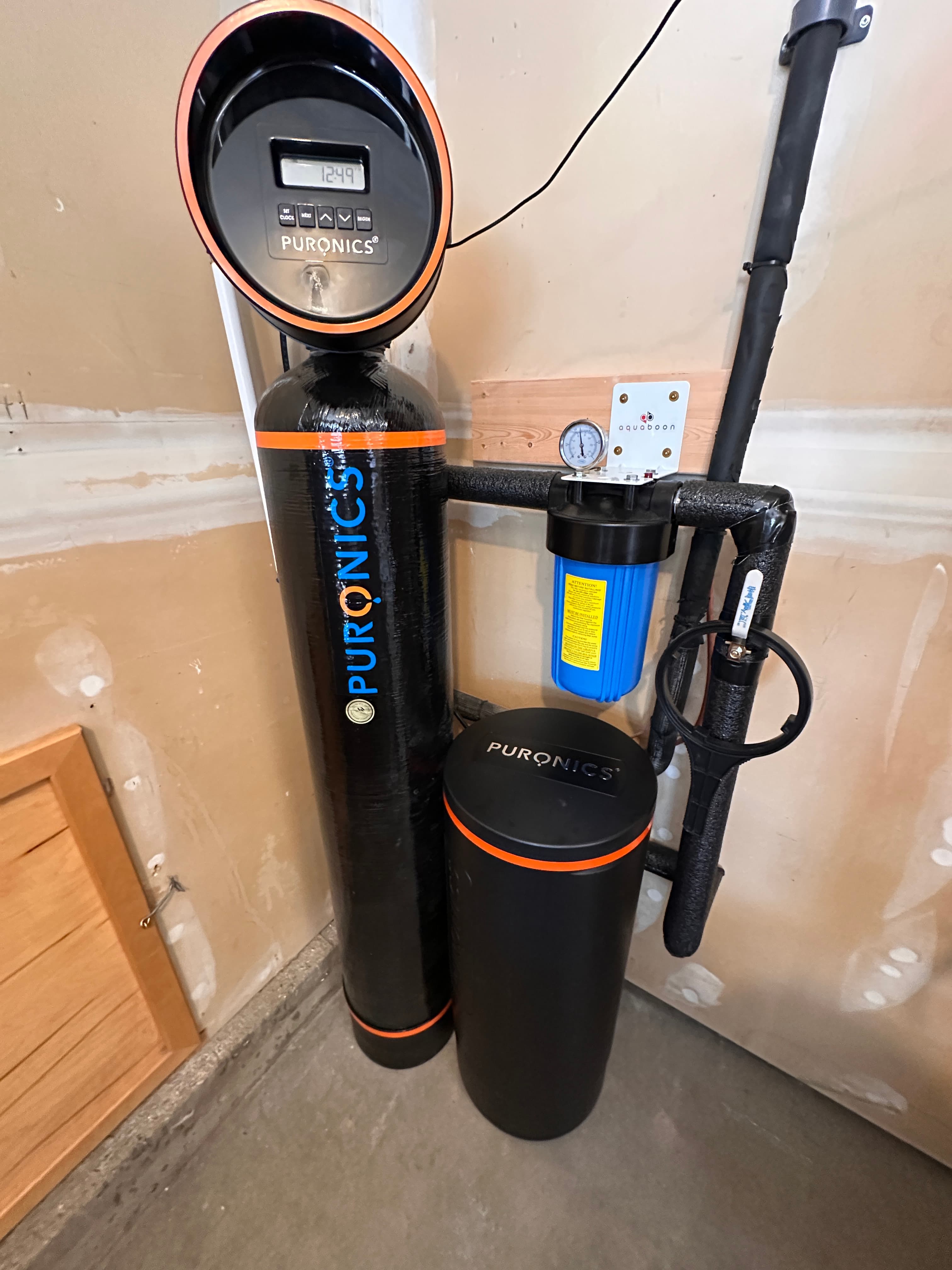
An ion exchange water softener on the main supply line is the direct solution for hardness-related appliance damage. The softener removes calcium and magnesium before they reach any appliance, any fixture, or any shower. With hardness at zero leaving the softener, scale formation stops. Existing scale does not dissolve, but new accumulation ends from the day of installation.
A no salt conditioner changes the crystal form of the hardness minerals rather than removing them. The minerals are still present in conditioned water, which is why conditioners do not produce the same appliance protection results as ion exchange at Phoenix hardness levels. At 18 to 22 GPG, no salt conditioning reduces but does not eliminate scale. For appliance protection, ion exchange is the more reliable choice at Phoenix hardness levels.
Frequently asked questions
- How does hard water damage a water heater in Phoenix?
- Calcium and magnesium precipitate out of solution when water heats. Inside a tank water heater, that scale builds on the heating element and tank floor. Scale acts as insulation, forcing the element to run hotter and longer. Phoenix water heaters without softening typically fail in seven years. With soft water, 12 to 15 years is common.
- Does hard water void appliance warranties in Phoenix?
- Some manufacturers include a hard water exclusion in water heater warranties. Check the warranty documentation before assuming coverage. Tankless water heaters are particularly sensitive to scale and many manufacturers recommend water at or below 11 GPG for full warranty protection.
- What are the signs of hard water damage in a Phoenix home?
- White crusty deposits around faucets and shower heads, cloudy or filmed glassware out of the dishwasher, visible orange or white staining in toilet tanks and bowls, dry or itchy skin after showering, and water heaters making popping or rumbling sounds during heating cycles.
- Can hard water damage pipes in a Phoenix home?
- Scale buildup inside pipes gradually reduces the internal diameter, restricting flow. This is most visible in older galvanized pipe but happens in copper and PEX as well at Phoenix hardness levels. Water heaters and appliances at the ends of heavily scaled lines show pressure and flow symptoms first.
- How long does it take for hard water to damage a dishwasher in Phoenix?
- Most Phoenix homeowners notice dishwasher film and glassware haze within the first year of use. Element failure in dishwashers due to hard water scale typically appears in year three to five without treatment. Regular rinse aid slows the visual symptoms but does not prevent element damage.