Surprise, AZ Water Quality 2026: Northwest Valley Hardness and What You Can Do About It
Surprise draws from Colorado River water delivered through the Central Arizona Project and deep West Valley groundwater wells, producing some of the highest hardness readings in the Phoenix metro at 15 to 20 grains per gallon depending on your supply zone.
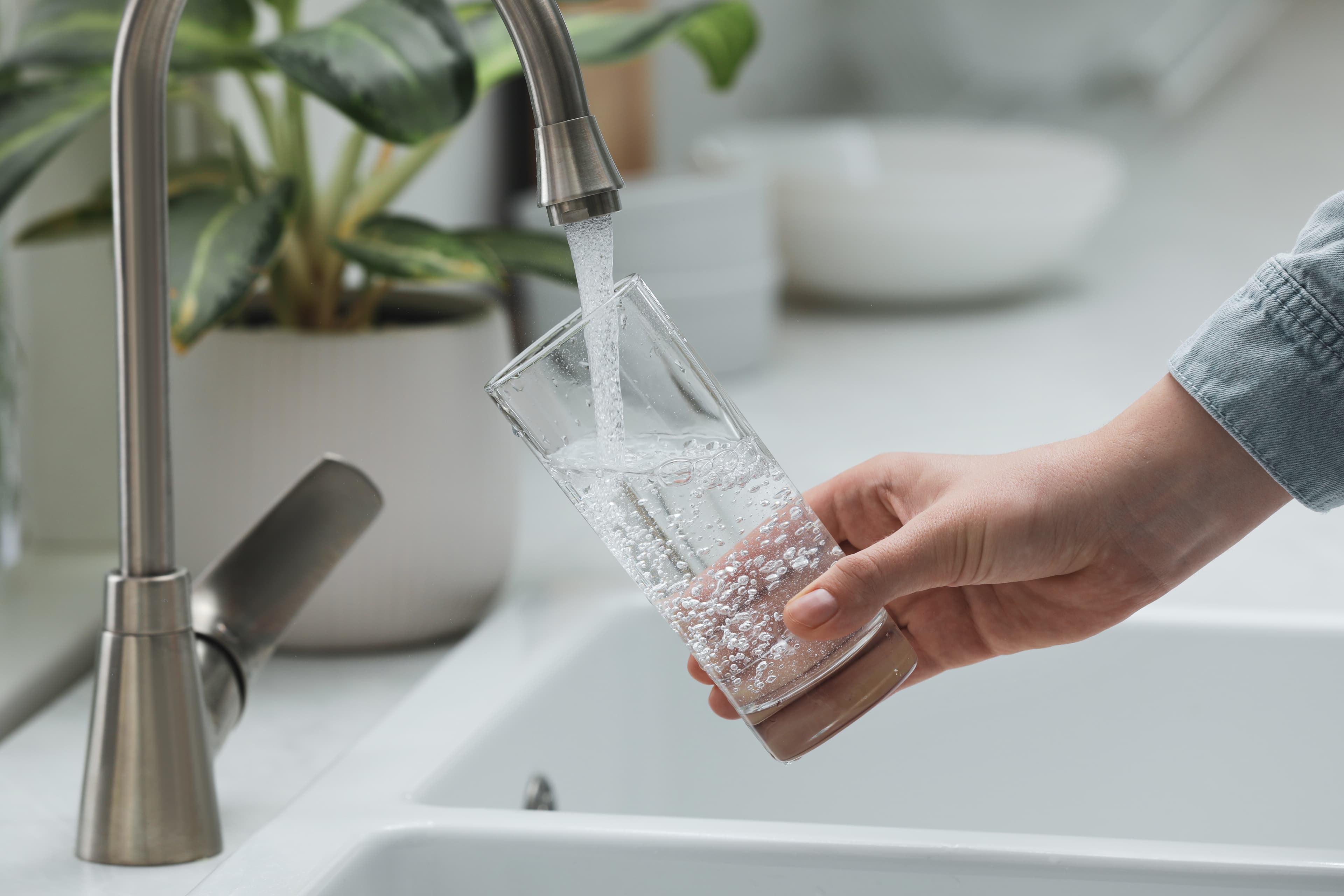
Surprise, AZ draws its drinking water from two primary sources: Colorado River water delivered through the Central Arizona Project canal and groundwater wells drilled into the West Valley aquifer, according to the City of Surprise water quality reporting at surpriseaz.gov/residents/water-resources. The result is water with some of the highest hardness readings in the Phoenix metro, ranging from 15 to 20 grains per gallon depending on seasonal supply blending and which distribution zone serves your address, based on third-party monitoring data at puritymap.com. Surprise uses chloramine as a residual disinfectant, the same approach used across the Northwest Valley corridor, which provides stability over long distribution runs into the city's rapidly growing western neighborhoods but requires catalytic carbon filtration for effective removal. This guide draws from City of Surprise public reporting and U.S. government data sources. Verify current contaminant levels at surpriseaz.gov/residents/water-resources/water-quality-reports before making treatment decisions for your household.
Where does Surprise get its water?
Surprise draws from two primary water sources. Colorado River water arrives via the Central Arizona Project canal, which stretches more than 336 miles from Lake Havasu City according to the Arizona Department of Water Resources at azwater.gov. Groundwater wells drilled into the West Valley aquifer supply the remainder. The City of Surprise blends these sources based on seasonal availability and publishes source water assessment data at surpriseaz.gov/residents/water-resources.
Each source carries different mineral concentrations. Groundwater from the West Valley aquifer dissolves calcium and magnesium from rock formations as it travels underground, typically arriving with higher dissolved mineral loads than CAP surface water. Colorado River water delivered through the CAP canal enters with its own hardness load from the Colorado River watershed. When summer peak demand increases groundwater pumping, hardness at the tap in affected distribution zones can push toward the upper end of the published range, exceeding annual Consumer Confidence Report averages that reflect the full-year blended supply.
What the Surprise Water Quality Report documents
The City of Surprise publishes a Consumer Confidence Report each year under the Safe Drinking Water Act, available at surpriseaz.gov/residents/water-resources/water-quality-reports. The report documents every regulated parameter monitored across the distribution system. Key parameters based on available public data are listed below. Always verify against the current year report at surpriseaz.gov, as values update annually.
- Hardness: 15 to 20 grains per gallon depending on seasonal supply blending and distribution zone, based on third-party monitoring data updated through 2026 at puritymap.com. The U.S. Geological Survey classifies water above 10.5 GPG as very hard at water.usgs.gov.
- Total dissolved solids: approximately 540 to 620 ppm based on third-party monitoring data at puritymap.com. The EPA secondary maximum contaminant level for TDS is 500 ppm per epa.gov/sdwa. Secondary standards are voluntary aesthetic guidelines rather than health-based limits.
- Disinfectant: chloramine, formed by combining chlorine and ammonia. Provides a stable residual over the long distribution runs into Surprise's growing western corridors. Third-party monitoring at puritymap.com reports a chloramine residual of approximately 1.4 to 1.6 ppm for the Surprise system.
- PFAS: no PFAS compounds detected above EPA health-based guidelines as of the most recent third-party monitoring at puritymap.com. The EPA finalized MCLs for PFOA and PFOS at 4 parts per trillion in 2024. Verify current detection status in the annual CCR at surpriseaz.gov.
- Arsenic: monitored under EPA MCL of 0.010 mg/L. Verify current measured values in the annual CCR at surpriseaz.gov.
- Fluoride: added at standard municipal levels consistent with Arizona Department of Health Services guidance. Typical Arizona municipal target is 0.7 ppm.
Hardness is the parameter that affects Surprise homeowners most directly, even though it is not a regulated contaminant under federal safe drinking water standards. The federal government does not set a maximum contaminant level for hardness because it is a quality and appliance damage issue rather than a health concern. At 15 to 20 grains per gallon, Surprise water ranks among the hardest in the Phoenix metro by the U.S. Geological Survey classification scale at water.usgs.gov.
Chloramine in Surprise water: what it means at the shower
Surprise uses chloramine for disinfection rather than free chlorine. Chloramine, formed by reacting chlorine with ammonia, provides a more stable disinfection residual than free chlorine over long distribution distances. Surprise's water system extends into one of the fastest-growing areas of the Phoenix metro, and the long pipeline runs to newer northwest Valley neighborhoods benefit from a disinfectant that does not dissipate quickly. Free chlorine can fall below detectable levels at the far ends of long distribution lines.
The tradeoff is at the tap. Chloramine is harder to remove than free chlorine and requires catalytic carbon with adequate contact time rather than standard activated carbon. Hot shower steam carries chloramine into enclosed bathroom air. A catalytic carbon block filter installed at the main line addresses chloramine and its byproducts at every fixture in the house, including the shower, where warm, enclosed conditions increase inhalation exposure relative to open-air water use.
Does Surprise water have PFAS?
Third-party monitoring data at puritymap.com shows no PFAS compounds detected above EPA health-based guidelines for Surprise municipal water. PFAS, per- and polyfluoroalkyl substances, are a class of synthetic compounds associated with health effects at high concentrations. The EPA finalized maximum contaminant levels for PFOA and PFOS at 4 parts per trillion in 2024. The City of Surprise monitors for PFAS and reports results at surpriseaz.gov. The Arizona Department of Environmental Quality maintains statewide PFAS monitoring data at azdeq.gov.
For Surprise homeowners who want point-of-use protection regardless of current detection status, reverse osmosis at the kitchen sink is the most effective available treatment. NSF-certified RO systems reduce PFOA and PFOS by 95 percent or more based on independent testing data. Verify current Surprise-specific PFAS detection levels in the Consumer Confidence Report at surpriseaz.gov before drawing conclusions about your specific supply zone.
What hard water does to Surprise appliances and fixtures
Calcium and magnesium in Surprise water are not health concerns at measured levels, but they are property concerns. When hard water heats up, dissolved minerals reach their solubility limit and precipitate onto the surfaces they contact. Inside a tank water heater, calcium carbonate builds at the tank floor above the burner and on the heating element surface. The U.S. Department of Energy has documented that each grain per gallon of hardness reduces water heater efficiency by approximately 1.5 percent at energy.gov. At a Surprise average of 16 GPG, that is roughly a 24 percent efficiency penalty accumulating on an untreated heater, compounding with every heating cycle.
Scale accumulates throughout the home. Dishwasher spray arms clog with calcium deposits. Washing machine water inlet valves and sensors fail earlier under hard water stress. Showerheads lose flow within a year without periodic descaling in very hard water zones. A water softener installed on the main supply line prevents scale accumulation from the day of installation by replacing calcium and magnesium ions with sodium before water reaches any fixture or appliance.
What filtration makes sense for Surprise homeowners?
Most Surprise homeowners benefit from a three-component approach that addresses the full profile documented in the Consumer Confidence Report. A water softener on the main supply line addresses hardness for every appliance, fixture, and shower in the house. A catalytic carbon block filter installed upstream of the softener addresses chloramine and its disinfection byproducts site-wide. A reverse osmosis unit at the kitchen sink addresses dissolved solids, arsenic under monitoring, PFAS under active review, and fluoride at the drinking and cooking tap.
The three systems work together in a specific sequence. Carbon filtration goes first on the main line to strip chloramine before it contacts the softener resin. Chloramine oxidizes softener resin over time and shortens resin life if the carbon stage is skipped. The softener goes next to remove hardness before water reaches the distribution branches inside the house. The RO unit goes under the kitchen sink. Extending the RO feed line to the refrigerator and ice maker applies the same water quality to every glass and every cube. A softener upstream of the RO membrane also reduces the dissolved solids load the membrane must process, extending membrane life.
Homeowners in Surprise who want to start with one component typically choose the water softener first because it addresses the most visible and most financially consequential problem at Surprise hardness levels. Scale damage to water heaters, dishwashers, and washing machines is cumulative and irreversible once it has formed. An in-home water test on your specific address measures your actual hardness rather than the citywide average. Contact the City of Surprise Water Resources at surpriseaz.gov/residents/water-resources to confirm your supply zone before sizing a treatment system.
Frequently asked questions
- Is Surprise AZ water safe to drink?
- Surprise tap water meets all EPA maximum contaminant levels and is considered safe by regulatory standards. The City of Surprise publishes annual Consumer Confidence Reports at surpriseaz.gov/residents/water-resources/water-quality-reports. Several parameters, including hardness and disinfection byproducts, may exceed Environmental Working Group health guidelines, which are set more conservatively than EPA legal limits. Households with infants, pregnant residents, or immunocompromised members may wish to use point-of-use filtration at the drinking tap. Verify current measured values in the annual CCR at surpriseaz.gov/residents/water-resources/water-quality-reports before making decisions for your household.
- What is the water hardness in Surprise AZ?
- Northwest Valley hardness from CAP Colorado River water and groundwater wells runs 15 to 20 grains per gallon depending on supply zone and seasonal groundwater blending, based on third-party monitoring data updated through 2026 at puritymap.com. The U.S. Geological Survey classifies water above 10.5 GPG as very hard at water.usgs.gov. Verify current measured values in the City of Surprise Consumer Confidence Report at surpriseaz.gov/residents/water-resources/water-quality-reports.
- Does Surprise AZ water use chloramine or chlorine?
- Surprise uses chloramine for disinfection, combining chlorine and ammonia to form a stable residual across the city's distribution network. Chloramine is more persistent than free chlorine, providing stable coverage over the long Northwest Valley distribution runs into Surprise's rapidly growing western neighborhoods. For homeowners, chloramine requires catalytic carbon filtration rather than standard activated carbon for effective removal at the tap.
- Does Surprise AZ water have PFAS?
- Third-party monitoring data at puritymap.com shows no PFAS compounds detected above EPA health-based guidelines for Surprise municipal water. The EPA finalized maximum contaminant levels for PFOA and PFOS at 4 parts per trillion in 2024. The City of Surprise monitors for PFAS and reports results at surpriseaz.gov. The Arizona Department of Environmental Quality maintains statewide PFAS monitoring data at azdeq.gov. Verify current detection status in the annual CCR at surpriseaz.gov before drawing conclusions about your specific supply zone.
- Where does Surprise AZ get its water?
- Surprise draws primarily from Colorado River water delivered through the Central Arizona Project canal and groundwater wells in the West Valley aquifer. The system is supplemented by reclaimed water for non-potable uses. The Arizona Department of Water Resources at azwater.gov documents the CAP canal delivering water more than 336 miles from Lake Havasu City. The City of Surprise publishes source water assessment data at surpriseaz.gov/residents/water-resources.
- Do I need a water softener in Surprise AZ?
- At 15 to 20 grains per gallon, Surprise water is classified as very hard by the U.S. Geological Survey at water.usgs.gov, well above the 10.5 GPG threshold. Hard water at those levels scales water heaters, films glassware, and reduces appliance lifespans. Most Surprise homeowners benefit from a water softener on the main supply line, paired with a catalytic carbon filter for chloramine and a reverse osmosis unit at the kitchen sink for drinking water quality.