Reverse Osmosis in Phoenix: What It Removes, How It Works, and What to Expect
Phoenix tap water averages 550 to 700 ppm total dissolved solids, carries documented PFAS detections, and tests above EPA-set arsenic levels in prior reporting periods. A four-stage reverse osmosis system at the kitchen sink addresses all of it at the point where you drink and cook.
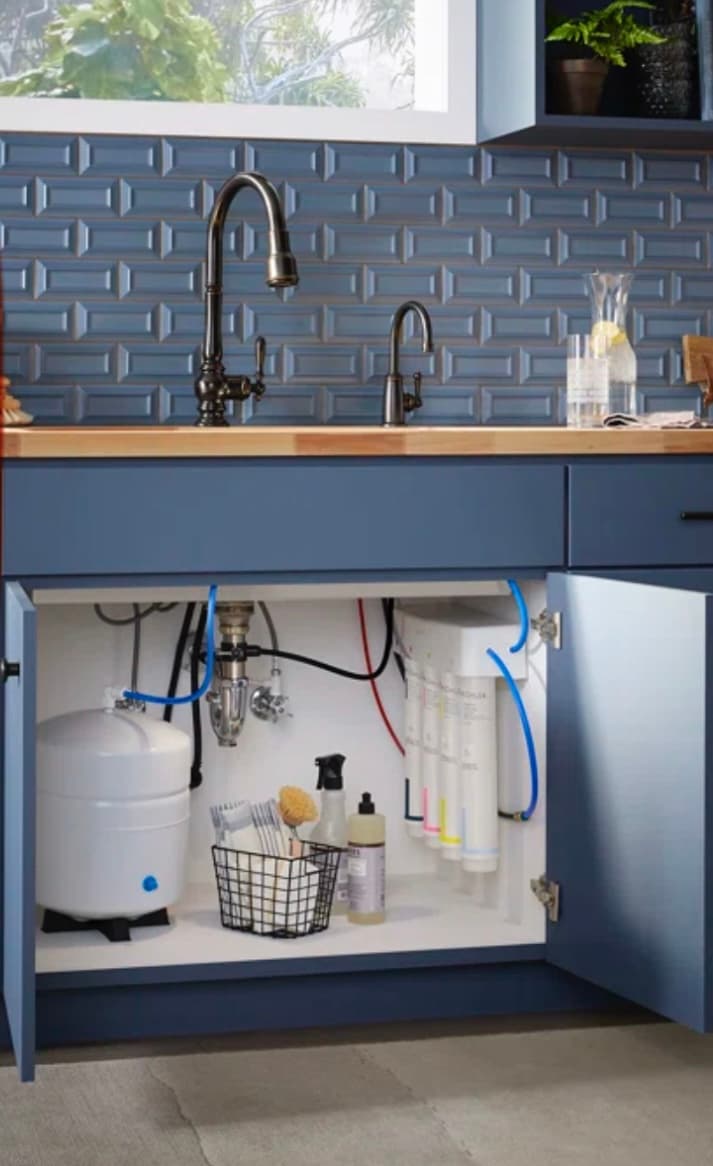
A four-stage reverse osmosis system under the kitchen sink reduces Phoenix tap water from 550 to 700 ppm total dissolved solids to under 25 ppm. It removes PFAS compounds detected in Phoenix source water since 2023, including PFOA and PFOS subject to EPA maximum contaminant levels of 4 parts per trillion finalized in April 2024. It removes arsenic present at trace levels from Southwestern geology, fluoride adjusted by the utility to 0.7 milligrams per liter, lead, and nitrate. Phoenix tap water ranks among the most mineral-laden municipal supplies in the United States. The City of Phoenix publishes its annual Consumer Confidence Report at phoenix.gov/waterservices, documenting each measured contaminant. An RO system at the kitchen is the point-of-use answer to what a whole-home softener and carbon filter leave behind. This guide explains what RO removes, the 4-stage versus 5-stage difference, the maintenance schedule, and how RO fits the full Phoenix treatment stack. Verify current contaminant data at phoenix.gov/waterservices before making treatment decisions.
What does reverse osmosis remove from Phoenix tap water?
Reverse osmosis uses a semi-permeable membrane to reject dissolved solids, metals, and synthetic compounds from water under pressure. Water molecules pass through the membrane. Most dissolved contaminants do not. The clean water collects in a small storage tank under the sink. The concentrated reject water drains to the waste line at a typical 3-to-1 ratio: three gallons drain for every one gallon of filtered water produced.
- PFAS (PFOA, PFOS, and related compounds): reduced by 95 percent or more in NSF/ANSI Standard 58 certified systems. Source: NSF International certification database at nsf.org.
- Arsenic: removed by greater than 95 percent in standard RO systems. Phoenix area geology contributes arsenic to source water at trace concentrations documented in annual Consumer Confidence Reports at phoenix.gov/waterservices.
- Fluoride: reduced from the municipal adjustment level of approximately 0.7 mg per liter. NSF-certified RO membranes remove fluoride at greater than 90 percent efficiency.
- Lead: reduced to below detection limits in properly maintained RO systems. Lead enters water primarily from household plumbing, not the municipal supply.
- Nitrate: reduced to below the EPA maximum contaminant level of 10 mg per liter in certified systems. Nitrate contamination is documented in Arizona groundwater, particularly in agricultural areas.
- Total dissolved solids: Phoenix tap averages 550 to 700 ppm TDS from dissolved minerals and treatment residuals. A properly maintained RO system reduces this to 15 to 25 ppm at the kitchen tap.
- Hardness minerals (calcium and magnesium): removed along with other dissolved solids. However, running Phoenix hardness of 12 to 22 grains per gallon directly through an RO membrane without upstream softening causes membrane fouling and shortens membrane life substantially.
What RO does not remove is equally important to understand. Chlorine and chloramine in Phoenix's municipal supply require a carbon pre-filter upstream of the membrane, because these disinfectants degrade the RO membrane over time. Standard RO systems include a carbon pre-filter stage specifically for this reason. RO also does not inactivate bacteria or viruses at the point of use on its own. Municipal Phoenix water is disinfected before it reaches your home, so biological contamination is not the primary concern for city-water builds. Well-water builds require a UV reactor on the main line in addition to RO at the kitchen.
Does Phoenix tap water have PFAS in 2026?
PFAS, per- and polyfluoroalkyl substances, are a class of synthetic chemicals used since the 1940s in fire-fighting foam, non-stick coatings, stain-resistant fabrics, and food packaging. They persist in the environment and accumulate in human tissue. The EPA finalized enforceable maximum contaminant levels for PFOA and PFOS at 4 parts per trillion in April 2024. PFAS compounds have been detected in Phoenix area source water since 2023 under the EPA Unregulated Contaminant Monitoring Rule 5 (UCMR5), which expanded mandatory monitoring requirements. Current measured concentrations are reported in the City of Phoenix annual Consumer Confidence Report at phoenix.gov/waterservices. The Arizona Department of Environmental Quality maintains statewide PFAS monitoring data and resources at azdeq.gov.
For Phoenix homeowners concerned about PFAS exposure, an NSF/ANSI Standard 58 certified reverse osmosis system at the kitchen sink is the most reliable point-of-use treatment option. NSF International certifies RO systems that demonstrate PFOA and PFOS reduction of 95 percent or more under controlled test conditions. Look for the NSF 58 mark when evaluating systems. Granular activated carbon reduces PFAS but does not achieve the same reduction percentages as an RO membrane. The combination of a whole-home catalytic carbon filter on the main line and an RO system at the kitchen provides comprehensive coverage for both chloramine and PFAS at their respective locations in the home.
How does a reverse osmosis system work?
Reverse osmosis works by applying pressure to push tap water across a semi-permeable membrane. The membrane's pore structure allows water molecules to pass while rejecting dissolved salts, metals, organic compounds, and synthetic chemicals. The clean water that passes through the membrane is called the permeate. The concentrated rejected water, carrying the removed contaminants, is called the brine or concentrate and flows to the drain.
A residential under-sink RO system produces filtered water at a low flow rate, typically 50 to 75 gallons per day for a standard residential unit. Because this rate is slower than on-demand kitchen use, the system fills a small pressurized storage tank under the sink between uses. When you open the dedicated RO faucet, water flows from the pressurized tank rather than directly from the membrane. Tank capacity is typically 2 to 4 gallons, sized to handle typical daily drinking and cooking demand in a household of two to four people. Most residential RO systems also include a tee to the refrigerator water line and ice-maker, supplying filtered water from the same storage tank.
What is the difference between 4-stage and 5-stage reverse osmosis?
A 4-stage reverse osmosis system runs incoming tap water through four sequential stages. Stage one is a sediment pre-filter, typically rated at 5 microns, which removes particulate matter, silt, rust particles, and pipe scale before water reaches the membrane. Stage two is a carbon block pre-filter that removes chlorine, chloramine, volatile organic compounds, and taste and odor compounds. Stage three is the RO membrane itself, where dissolved contaminants are rejected and clean permeate is collected. Stage four is a carbon post-filter, often called a polishing filter, which removes any residual taste and odor from the storage tank before water reaches the faucet.
A 5-stage system adds a fifth stage after the post-filter. The most common fifth stage for Phoenix city-water builds is a remineralization cartridge. Reverse osmosis removes virtually all dissolved minerals, which produces water that is very clean but also very low in the trace minerals some people prefer for taste and hydration. A remineralization stage adds back calcium and magnesium in controlled concentrations, typically 8 milligrams per liter of calcium and 4 milligrams per liter of magnesium, producing water in the 45 to 65 ppm TDS range with a mineral profile comparable to high-quality spring water. The alternative fifth stage for well-water builds is a UV reactor, which inactivates any biological contaminants that may pass through the carbon and membrane stages.
For Phoenix homeowners on city water, the choice between 4-stage and 5-stage comes down to preference for remineralized water. Both systems produce water that meets or exceeds the contaminant reduction targets for PFAS, arsenic, and dissolved solids. The remineralized system produces water with a more mineral-forward taste that some households prefer, particularly those transitioning from premium bottled spring water. Neither system requires electricity for the filtration process itself. The UV fifth stage in a well-water application does require a power connection for the lamp.
How long does an RO membrane last in Phoenix?
An RO membrane in a properly maintained system typically lasts two to four years in Phoenix. The two variables that most affect membrane life in the Phoenix context are chloramine exposure and hardness scaling. Phoenix Water Services uses chloramine as its primary residual disinfectant. Chloramine degrades RO membrane polymers more slowly than free chlorine but does degrade them over time with direct contact. The carbon pre-filter in stage two of the RO system removes chloramine before water reaches the membrane. When that carbon pre-filter is changed on schedule, the membrane is protected. When the carbon pre-filter is depleted and not replaced, chloramine passes through to the membrane and shortens its service life.
Hardness scaling is the second membrane threat in Phoenix. Calcium carbonate precipitates on the reject side of the RO membrane as the water concentration rises during filtration. At Phoenix's typical 12 to 22 grains per gallon, the scaling rate without upstream softening is significantly higher than in lower-hardness markets. A water softener upstream of the RO system removes calcium and magnesium before they reach the membrane, eliminating this scaling mechanism and extending membrane life. Most Phoenix installs pair the RO system with a softener upstream specifically for this reason, not just for whole-home softening.
- Sediment pre-filter (Stage 1): replace every 6 to 12 months. Phoenix water carries silt and pipe scale that loads this filter faster than in lower-turbidity markets.
- Carbon pre-filter (Stage 2): replace every 6 to 12 months. This filter protects the RO membrane from chloramine. Never let it go beyond 12 months.
- RO membrane (Stage 3): replace every 2 to 4 years with upstream carbon and softener in place. Replace sooner if output TDS rises toward 50 ppm or above.
- Carbon post-filter (Stage 4): replace every 6 to 12 months, or annually at minimum. Protects taste at the faucet.
- Remineralization cartridge (Stage 5 if present): replace every 6 to 12 months depending on manufacturer specification.
A TDS meter is the simplest way to monitor RO output quality between service intervals. Tap water entering the system at 600 ppm should produce filtered water at 15 to 25 ppm in a functioning system. If output TDS climbs toward 50 ppm or above, the membrane or pre-filters need evaluation. TDS meters are inexpensive and available at most hardware and home improvement stores. Track readings periodically and use them as an early warning rather than waiting for a taste change to prompt a service call.
Does reverse osmosis remove hardness from Phoenix water?
Yes, reverse osmosis removes calcium and magnesium, the dissolved minerals that constitute water hardness, along with the other dissolved solids in Phoenix water. The RO membrane does not discriminate between hardness minerals and other ions: both are rejected and sent to drain. This means the filtered water leaving the RO faucet carries essentially no hardness. For households using the RO system exclusively for drinking and cooking water, the kitchen tap hardness goes to zero.
The important Phoenix-specific consideration is that an RO system is not a substitute for a whole-home softener when hardness is the primary concern. RO treats only the water that flows through the under-sink unit, which accounts for a small fraction of total household water use. Showers, dishwashers, washing machines, and water heaters all continue to run on the full Phoenix tap supply. For appliance protection and shower experience, the water softener on the main line is the necessary piece. The RO system handles what the softener does not reach: the drinking tap, the refrigerator, and the ice-maker.
What should I pair with a reverse osmosis system in Phoenix?
The standard Phoenix water treatment sequence pairs a catalytic carbon filter at the main line with a water softener on the supply, followed by a reverse osmosis system at the kitchen. Each system in that sequence protects the next. The carbon filter on the main line removes chloramine before it reaches the softener resin. Chloramine degrades ion exchange resin over time with direct contact, shortening resin life. Upstream carbon extends resin life and addresses the chemical smell in every shower site-wide.
The softener on the supply line removes calcium and magnesium before they reach the RO membrane. Without upstream softening, Phoenix's 12 to 22 GPG hardness causes calcium carbonate scaling on the reject side of the RO membrane. That scaling gradually reduces membrane permeability and shortens replacement intervals. With a softener upstream, the membrane handles a much cleaner input and lasts significantly longer. The RO system then performs its specific job: removing PFAS, arsenic, dissolved solids, fluoride, and the trace sodium added by the ion exchange process from the drinking water supply.
Well-water builds outside the Phoenix municipal network add a UV reactor to the main line after the softener. UV at 254-nanometer wavelength inactivates bacteria, viruses, and protozoan cysts without chemicals or taste change. Municipal Phoenix water is already disinfected. A private well is not. The UV stage belongs after carbon and softener and before distribution to the household. RO at the kitchen handles dissolved contaminants. UV at the main line handles biological safety for the whole-home supply in well-water applications.
How does reverse osmosis compare to bottled water in Phoenix?
Phoenix tap water averages 550 to 700 ppm total dissolved solids. Standard grocery-store purified bottled water runs below 30 ppm TDS, produced by the bottler using RO on municipal supply. Premium spring water averages 95 to 180 ppm TDS, with a mineral composition dominated by calcium and magnesium in concentrations associated with the specific spring source. A 4-stage RO system at the kitchen delivers water in the 15 to 25 ppm TDS range. A 5-stage system with remineralization delivers water in the 45 to 65 ppm TDS range with specific added minerals, comparable to the profile of quality spring water.
The water quality comparison favors RO-filtered water over both unfiltered Phoenix tap and standard purified bottled water. The ongoing cost comparison depends on filter replacement schedule versus bottled water volume. The plastic and logistics footprint comparison favors the under-sink system without qualification: no bottles, no delivery, no recycling burden. The refrigerator and ice-maker supply from the same RO storage tank means every glass of water from the door and every ice cube produced in the freezer is filtered to the same standard as the kitchen tap.
Frequently asked questions
- Does reverse osmosis remove PFAS from Phoenix tap water?
- NSF/ANSI Standard 58 certified reverse osmosis systems reduce PFOA and PFOS by 95 percent or more in independent testing. The EPA finalized maximum contaminant levels for PFOA and PFOS at 4 parts per trillion in April 2024. Verify current PFAS measurements in the City of Phoenix annual Consumer Confidence Report at phoenix.gov/waterservices before drawing treatment conclusions.
- What does reverse osmosis remove from Phoenix water?
- A four-stage RO system removes PFAS, arsenic, fluoride, lead, nitrate, dissolved hardness minerals, and dissolved solids. Phoenix tap water averages 550 to 700 ppm total dissolved solids. A properly maintained RO system at the kitchen reduces that to under 25 ppm. It does not remove chlorine or chloramine, which require a catalytic carbon filter upstream.
- How long does an RO membrane last in Phoenix?
- An RO membrane typically lasts two to four years in Phoenix with a carbon pre-filter upstream removing chloramine before it reaches the membrane surface. Without upstream carbon, membrane degradation accelerates significantly. Phoenix hardness at 12 to 22 GPG also fouls RO membranes faster without a softener upstream to reduce mineral scaling.
- What is the difference between 4-stage and 5-stage reverse osmosis?
- A 4-stage RO system runs water through a sediment pre-filter, a carbon pre-filter, the RO membrane, and a carbon polish post-filter. A 5-stage system adds a fifth stage, most commonly a remineralization cartridge that adds back calcium and magnesium at concentrations beneficial for taste and hydration, or a UV stage for biological safety on well-water builds.
- Should I pair reverse osmosis with a water softener in Phoenix?
- Yes, for two reasons. First, Phoenix water at 12 to 22 grains per gallon causes rapid calcium carbonate scaling on the RO membrane, shortening membrane life without a softener upstream. Second, the softener handles hardness site-wide while the RO handles PFAS, arsenic, dissolved solids, and the trace sodium added by the ion exchange process at the kitchen tap.