PFAS in Maricopa County drinking water: what the data shows
EPA UCMR 5 data detected PFAS in several Arizona water systems. Here is what Phoenix metro homeowners need to know about their tap water in 2026.
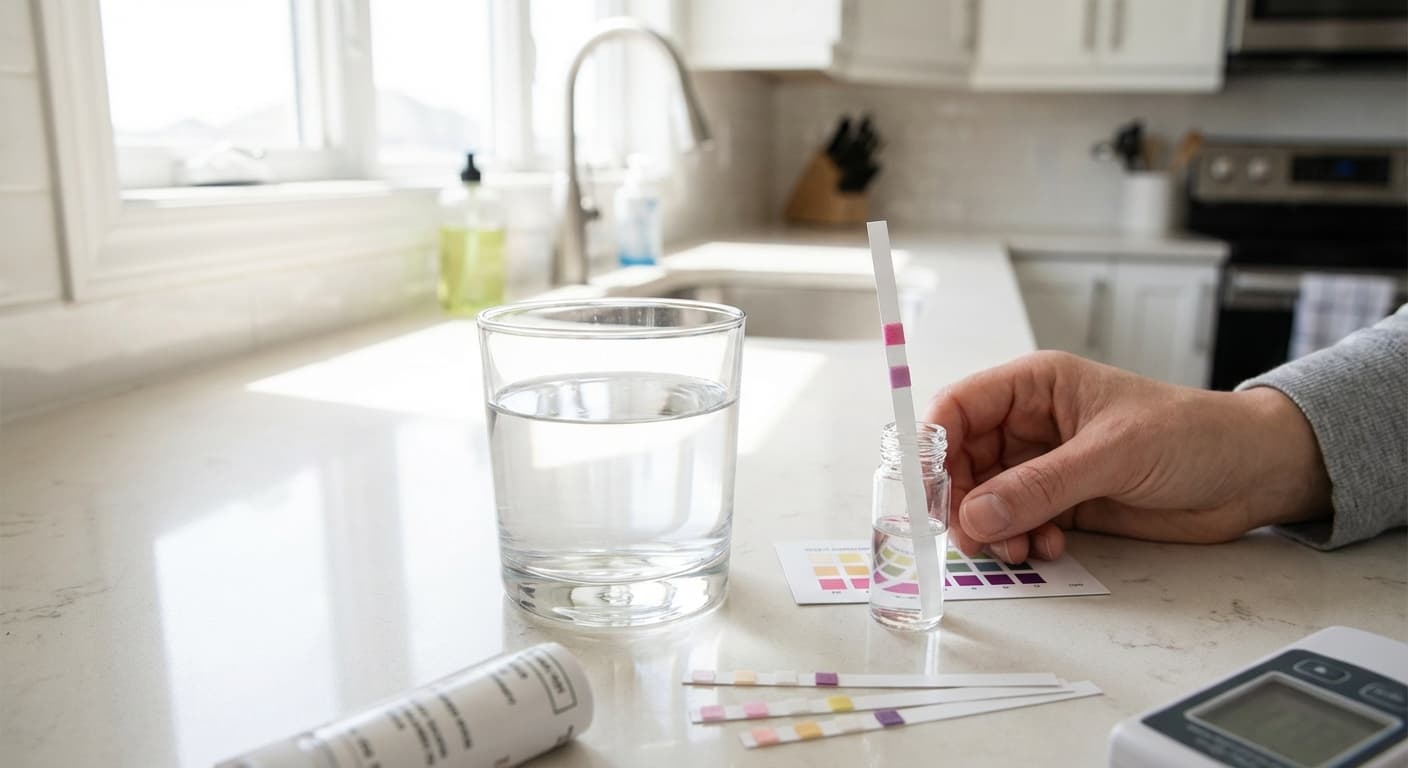
The EPA's fifth Unregulated Contaminant Monitoring Rule, which ran from January 2023 through December 2025, required public water systems across the United States to test for 29 per- and polyfluoroalkyl substances. In Arizona, 57 drinking-water utilities reported PFAS detections at or above the EPA minimum reporting level, and 27 of those utilities exceeded the final EPA Maximum Contaminant Level for PFOA or PFOS, collectively serving roughly 1.74 million residents, according to analysis of the UCMR 5 data by mapscaping.com. Several Maricopa County water systems, including Tempe, Gilbert, and Peoria, had detections above the federal MCL during the monitoring period, according to EPA UCMR 5 data compiled at waterutilityreport.com. The EPA set enforceable limits for PFOA and PFOS at 4 parts per trillion in April 2024. Water systems have until 2029 to comply. A reverse osmosis system certified to NSF/ANSI 58 is the most reliable point-of-use option for reducing PFAS at the kitchen tap while those compliance timelines play out.
What is PFAS and why does it matter for drinking water
PFAS, short for per- and polyfluoroalkyl substances, are a class of thousands of synthetic chemicals manufactured since the 1940s. They are used in non-stick cookware coatings, water-resistant clothing, food packaging, and industrial firefighting foams. The carbon-fluorine bond that makes PFAS useful also makes it extraordinarily resistant to breaking down in the environment or in the human body, which is why they are commonly called forever chemicals.
Health concerns associated with PFAS exposure include immune system effects, thyroid disruption, elevated cholesterol, and associations with certain cancers at high exposures, according to the EPA's April 2024 rulemaking for PFAS in drinking water (epa.gov/sdwa/and-polyfluoroalkyl-substances-pfas). The two most-studied compounds, PFOA and PFOS, were phased out of US manufacturing by the mid-2000s but persist widely in the environment from decades of prior use. In April 2024, the EPA finalized the first enforceable national limits for PFAS in drinking water: 4 parts per trillion for PFOA and 4 ppt for PFOS, with separate limits for four additional PFAS. Water utilities have five years, until 2029, to achieve compliance.
What UCMR 5 found in Arizona water systems
UCMR 5 is the EPA's systematic monitoring program requiring public water systems to test for contaminants that do not yet have enforceable federal limits or are newly regulated. The fifth round ran from January 2023 through December 2025 and covered 29 PFAS compounds. Nationally, the Environmental Working Group's analysis of the UCMR 5 data found 3,539 community water systems with detectable PFAS, out of approximately 95 percent of the systems tested under the rule (ewg.org/interactive-maps/pfas_contamination).
In Arizona, 57 drinking-water utilities reported at least one PFAS detection at or above the EPA minimum reporting level during the monitoring period. Of those, 27 utilities exceeded the final federal MCL for PFOA or PFOS, affecting roughly 1.74 million people, per mapscaping.com's compilation of the UCMR 5 data finder. The most commonly detected PFAS compounds across Arizona were PFBS (40 utilities), PFPeA (34 utilities), and PFHxA (32 utilities).
Several Maricopa County utilities had detections above the federal MCL during UCMR 5 monitoring. The City of Tempe recorded PFOS at 55.80 ng/L and PFOA at 38.70 ng/L in January 2025 samples, more than 13 times the 4 ppt federal limit, according to EPA UCMR 5 data compiled at waterutilityreport.com. The Town of Gilbert recorded PFOS at 9.80 ng/L and PFOA at 6.50 ng/L. The City of Peoria had PFOA detections at 5.60 ng/L. All three readings are above the 4 ppt MCL that takes effect for compliance in 2029.
Phoenix and Scottsdale water quality reports
The City of Phoenix publishes an annual Water Quality Report at phoenix.gov/waterservices documenting contaminant test results. Phoenix has monitored for PFAS compounds under UCMR 5 since January 2023. The city draws 97 to 99 percent of its supply from surface sources including the Salt and Verde rivers, treated at multiple plants across the metro. Residents can review the most recent Consumer Confidence Report and UCMR 5 results using the EPA Data Finder at epa.gov/dwucmr/fifth-unregulated-contaminant-monitoring-rule-data-finder, filtering by the City of Phoenix water system.
Scottsdale has a specific and documented PFAS history. The Indian Bend Wash area near Scottsdale Airport is a listed Superfund site where PFAS from aqueous film-forming foam used in historical fire training exercises entered the groundwater. Scottsdale Water monitors for PFAS and reports results in its annual Water Quality Report at scottsdaleaz.gov/water. The Arizona Department of Environmental Quality maintains statewide PFAS monitoring information at azdeq.gov.
How PFAS compares to other contaminants Phoenix homeowners manage
PFAS sits in a different category from the contaminants Phoenix area homeowners have historically focused on. Chloramine, used for disinfection across the valley, requires catalytic carbon filtration to remove. Arsenic, which occurs in Southwest groundwater, is regulated at 10 ppb. Lead is a concern in homes with pre-1986 plumbing. Trihalomethanes are a byproduct of chlorination.
PFAS differs from all of those in one key respect: no conventional treatment technology for the above contaminants will reliably remove PFAS. Standard activated carbon does little at typical residential contact times. Chlorination does not degrade PFAS. Water softeners, essential for Phoenix's 12 to 22 grain-per-gallon hardness, have no effect on PFAS. The molecule's chemical stability means it passes through most residential treatment stages intact.
What removes PFAS from tap water
Three treatment technologies are documented to reduce PFAS at the point of use: reverse osmosis, granular activated carbon at high contact time, and ion exchange resin. Of the three, reverse osmosis is the most practical for residential use. The EPA's guidance on water filters certified to reduce PFAS, at epa.gov/water-research/identifying-drinking-water-filters-certified-reduce-pfas, states that reverse osmosis systems can greatly reduce PFAS levels. NSF/ANSI Standard 58 covers reverse osmosis drinking water treatment systems and tests for contaminant reduction. Homeowners should confirm that any system they purchase carries an active NSF 58 certification.
- NSF/ANSI 58 certified reverse osmosis: removes PFAS, arsenic, nitrates, fluoride, and lead through the membrane stage
- Granular activated carbon: effective at large scale, less so in typical under-sink residential cartridges with short contact times
- Ion exchange resin: effective for PFAS but primarily used in municipal or commercial treatment systems
- Water softeners: reduce hardness only, no effect on PFAS
- Standard pitcher filters: not certified for PFAS reduction unless specifically labeled and independently verified
Free water test available in the Phoenix metro
Aqua Wellness offers a no-charge water quality consultation for Phoenix metro homeowners. If you have questions about PFAS, hardness, chloramine, or TDS in your supply, or you want to review your water system's UCMR 5 and Consumer Confidence Report data, reach out to schedule an on-site test. There is no obligation to purchase. Call or book online to set up a time at your kitchen tap.
Frequently asked questions
- Is Phoenix tap water safe to drink?
- The City of Phoenix water meets all EPA maximum contaminant levels and is considered safe by regulatory standards. Several parameters, including PFAS compounds detected during UCMR 5 monitoring, may exceed the Environmental Working Group's more conservative health guidelines. Households with infants, pregnant residents, or immunocompromised members may choose to use a point-of-use reverse osmosis filter at the drinking tap as an additional precaution. Verify current test results in the City of Phoenix annual Water Quality Report at phoenix.gov/waterservices.
- What is the legal limit for PFAS in drinking water?
- The EPA finalized Maximum Contaminant Levels in April 2024. PFOA and PFOS are each limited to 4 parts per trillion (4 nanograms per liter). HFPO-DA (GenX chemicals) is limited to 10 ppt. PFNA and PFHxS each have individual limits, and a Hazard Index applies to mixtures. Water systems must achieve compliance by 2029. The full rule is at epa.gov/sdwa/and-polyfluoroalkyl-substances-pfas.
- Does a water softener remove PFAS?
- No. Water softeners use ion-exchange resin to swap calcium and magnesium ions for sodium ions, reducing hardness. PFAS compounds are not removed by this process. A water softener is essential for Phoenix's 12 to 22 GPG hardness but needs to be paired with a reverse osmosis unit at the kitchen sink if PFAS reduction is the goal.
- What water treatment removes PFAS?
- Reverse osmosis certified to NSF/ANSI Standard 58 is the most practical point-of-use option for residential PFAS reduction, according to EPA guidance at epa.gov. Granular activated carbon at high contact time and ion exchange resin also reduce PFAS. Standard pitcher filters and most refrigerator filters are not certified for PFAS reduction. Confirm NSF 58 certification before purchasing any point-of-use system.