Hard Water in Mesa and Ahwatukee: What City Data Shows and What to Do About It
Mesa and Ahwatukee run 18 to 22 GPG, among the highest hardness levels in the Phoenix metro. Here is what City of Mesa and Phoenix Water reports document and what treatment actually works at those levels.
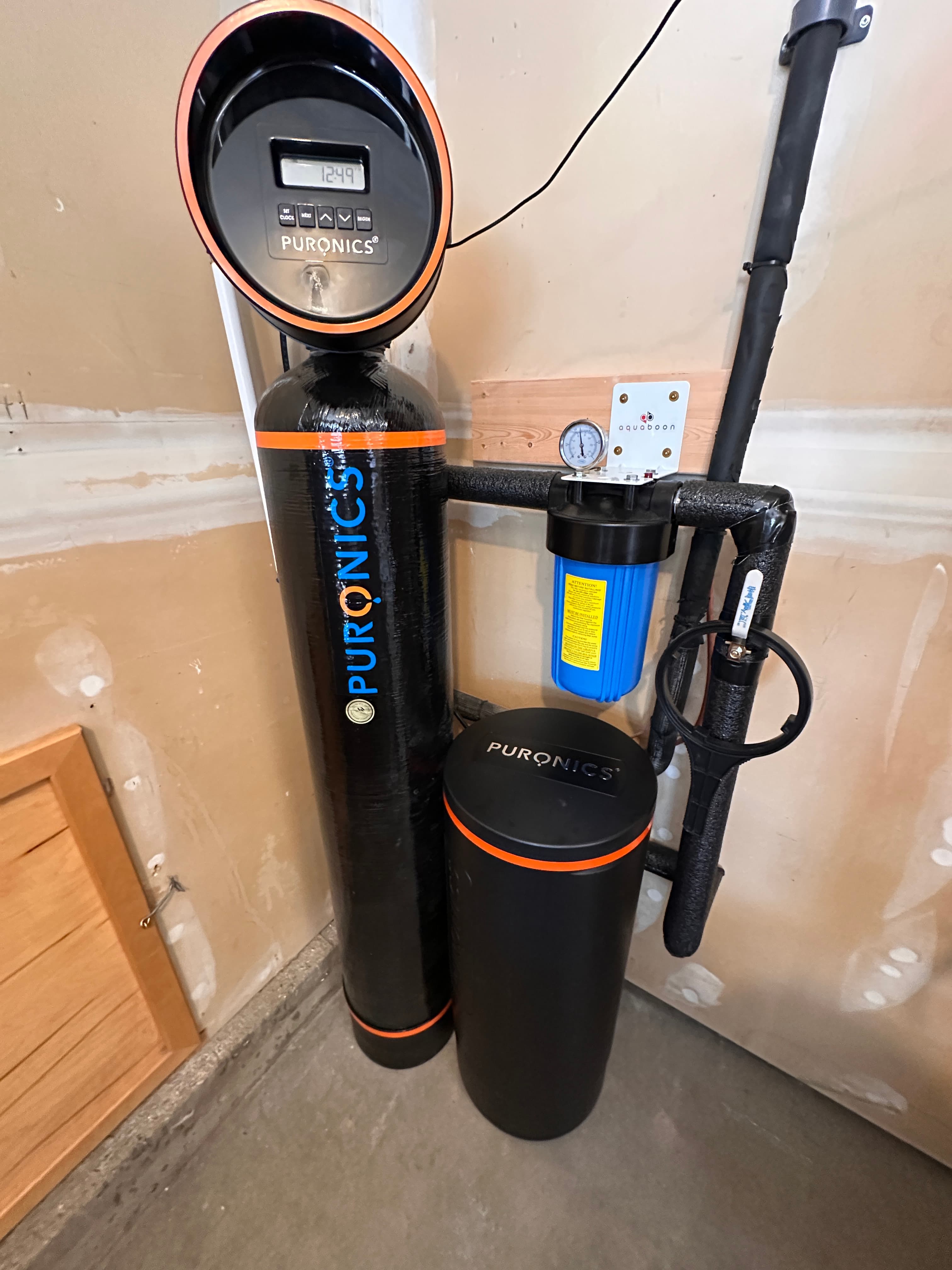
Mesa and Ahwatukee face some of the hardest residential water in the Phoenix metro. Mesa's municipal supply, drawn from Salt River Project and Central Arizona Project deliveries, tests between 18 and 22 grains per gallon according to annual water quality data published at mesaaz.gov. Ahwatukee Foothills Village, served by Phoenix Water on a Salt River blend, tests 19 to 22 GPG, the highest hardness range regularly measured in city-served Phoenix metro neighborhoods according to City of Phoenix water quality reports at phoenix.gov/waterservices. The U.S. Geological Survey classifies water above 10.5 GPG as very hard, documented at water.usgs.gov. Both communities sit nearly double that threshold. At these levels, the standard treatment recommendation from the Water Quality Association is an ion exchange water softener sized specifically for local hardness. This guide draws on publicly available utility reports to explain what Mesa and Ahwatukee homeowners are actually dealing with and what treatment works at their specific hardness range.
What the City of Mesa water data shows
Mesa draws its water from two primary sources: Salt River Project surface water from the Salt and Verde Rivers, and Central Arizona Project water transported by canal from the Colorado River. Both pass through significant limestone geology before reaching Mesa's treatment facilities. Mesa's annual Consumer Confidence Report, available at mesaaz.gov, shows hardness in the 18 to 22 GPG range as a consistent measured value. Total dissolved solids in Mesa water typically run between 500 and 700 milligrams per liter. Fluoride is adjusted to 0.7 mg/L in compliance with U.S. Department of Health and Human Services guidance for community water systems. Chloramine is used as the disinfection residual.
Mesa's distribution system draws on groundwater backup during summer peak demand periods. The groundwater component carries higher dissolved mineral loads than the treated surface water. Homes in eastern Mesa neighborhoods served by blended surface and groundwater supplies sometimes test at the upper end of the 18 to 22 GPG range. Always verify current hardness for your specific address with the City of Mesa Consumer Confidence Report or by contacting Mesa Water Resources at mesaaz.gov.
Why Ahwatukee runs harder than the Phoenix average
Ahwatukee Foothills Village is served by Phoenix Water's southern distribution network. The City of Phoenix Consumer Confidence Report, published annually at phoenix.gov/waterservices, is the authoritative source for hardness data covering this area. Ahwatukee's supply comes predominantly from a Salt River Project surface water blend. SRP draws from the Salt and Verde River watersheds, which drain terrain rich in calcium-bearing rock formations. By the time that water reaches southern Phoenix distribution, the mineral load is higher than in central Phoenix neighborhoods served by a greater proportion of CAP water.
City of Phoenix water quality data shows the southern distribution districts that include Ahwatukee consistently testing at 19 to 22 GPG. That places Ahwatukee above the Phoenix metro average of approximately 18 GPG and above most other city-served neighborhoods. For context: Gilbert on Town of Gilbert supply runs 15 to 18 GPG. Scottsdale on its CAP-heavy Lake Pleasant system averages approximately 17 GPG. The only city-served areas that approach or exceed Ahwatukee hardness are Peoria neighborhoods drawing heavily on local groundwater. Verify Ahwatukee-specific hardness data at phoenix.gov/waterservices.
What 18 to 22 GPG hardness does to Mesa and Ahwatukee homes
The Water Quality Research Foundation, the research arm of the Water Quality Association, has studied appliance lifespan across different hardness levels. At 18 to 22 GPG, scale accumulation inside a tank water heater is measurable within the first year of operation. The U.S. Department of Energy has estimated that each grain per gallon of hardness reduces water heater efficiency by approximately 1.5 percent. At 20 GPG, that is a 30 percent efficiency reduction accumulating over the unit's lifespan. Industry data from the water treatment field indicates water heaters in untreated hard water at Phoenix metro levels typically fail in approximately seven years. With a softener keeping hardness near zero, the same unit commonly runs 12 to 15 years.
- White scale deposits around faucet bases, showerheads, and toilet tank fill valves, visible within months of moving in
- Cloudy or filmed glassware out of the dishwasher regardless of detergent or rinse aid brand
- Water heater making popping or rumbling sounds as scale cracks under thermal expansion during heating cycles
- Skin feeling dry or tight after showering, compounding with the low humidity desert climate
- Dishwasher spray arm ports clogging with calcium deposits within two to three years of use
- Washing machine heating elements and inlet valves failing early due to mineral accumulation
Why no-salt conditioners fall short at Mesa and Ahwatukee hardness
No-salt water conditioners use a process called template-assisted crystallization (TAC) or catalytic conditioning. The technology converts dissolved calcium and magnesium into micro-crystals that travel through plumbing without adhering to surfaces. It does not remove hardness minerals from the water. They remain in solution, in a different physical form. The water still tests hard on a standard hardness strip. Published performance data from the Water Quality Research Foundation indicates TAC systems provide meaningful scale reduction in water below approximately 12 to 15 GPG. At Mesa and Ahwatukee levels of 18 to 22 GPG, the technology is operating above its reliable effective range. A salt-based ion exchange softener removes the calcium and magnesium ions entirely, reducing tap hardness to zero or near zero GPG. That is the only technology that delivers the full soft water experience at Mesa and Ahwatukee hardness levels.
How to size a water softener for Mesa or Ahwatukee hardness
The sizing calculation for an ion exchange softener starts with the daily grain load: hardness in grains per gallon times daily household water use in gallons. At 20 GPG with a three to four person household using 300 gallons per day, the daily grain load is 6,000 grains. For a five-day regeneration cycle, the softener needs 30,000 grain working capacity at minimum. Standard industry practice is to specify well above the minimum to handle above-average usage days and prevent hardness breakthrough between regenerations.
For Mesa households at 18 to 20 GPG, most plumbers specify 40,000 to 48,000 grain capacity. For Ahwatukee households at 19 to 22 GPG, or larger Mesa families at the high end of the hardness range, 48,000 to 64,000 grain capacity is appropriate. Undersizing a softener in a hard-water environment means the resin bed exhausts before the programmed regeneration cycle, allowing hardness breakthrough on some days and continued scale accumulation. For accurate sizing, start with a confirmed GPG reading at your tap rather than the utility zone average.
What else is in Mesa and Ahwatukee water
Hardness is the most visible problem in Mesa and Ahwatukee water but not the only concern in public data. Chloramine is the disinfection residual used by both Mesa and Phoenix Water. Unlike free chlorine, chloramine requires catalytic carbon rather than standard activated carbon to break down effectively at the point of use. Mesa's annual Consumer Confidence Report shows disinfection byproducts including HAA5 and TTHMs at levels that in prior reporting periods have been near EPA maximum contaminant level compliance thresholds. PFAS detections have been reported in Arizona source water supplies in data from the Arizona Department of Environmental Quality at azdeq.gov. Reverse osmosis at the kitchen sink reduces PFAS and dissolved solids. A catalytic carbon filter on the main line addresses chloramine. These additions cover the full documented contaminant picture beyond hardness. Verify current contaminant data for your supply zone with the most recent Consumer Confidence Report from your utility before making treatment decisions.
How to confirm your specific address hardness
The City of Mesa Consumer Confidence Report is available at mesaaz.gov and reports hardness as a range for each supply zone. Mesa's Water Resources Department provides supply zone information for a specific address on request. The City of Phoenix report at phoenix.gov/waterservices covers Ahwatukee addresses. Both reports are updated annually per Safe Drinking Water Act reporting requirements. Utility reports provide supply zone averages, which may vary from the reading at your specific tap depending on local distribution infrastructure, plumbing age, and distance from the nearest treatment facility. Hardware store hardness test strips provide a rough reading accurate to plus or minus 1 to 2 GPG. For precise equipment sizing, a calibrated eight-panel in-home water test at your tap gives the most accurate result.
Frequently asked questions
- What is the water hardness in Mesa, AZ?
- City of Mesa annual Consumer Confidence Reports show hardness in the 18 to 22 grains per gallon range. Mesa draws from Salt River Project and Central Arizona Project allocations, both of which pass through limestone-rich geology before treatment. Verify current hardness for your supply zone at mesaaz.gov or contact Mesa Water Resources directly.
- Is Ahwatukee water harder than the rest of Phoenix?
- Yes. Ahwatukee Foothills Village receives water from Phoenix Water's southern distribution network on a Salt River Project blend that consistently tests 19 to 22 GPG, the highest hardness range in city-served Phoenix metro neighborhoods according to City of Phoenix water quality data at phoenix.gov/waterservices.
- What size water softener does a Mesa home need?
- At Mesa's typical hardness of 18 to 22 GPG, a three to four person household using 300 gallons per day carries a daily grain load of 5,400 to 6,600 grains. Most plumbers specify 40,000 to 48,000 grain systems for this household size, with Ahwatukee homes at the higher end of the range often sized at 48,000 to 64,000 grain capacity.
- Does a no-salt water conditioner work for Mesa or Ahwatukee water?
- No-salt conditioners use template-assisted crystallization to reduce scale formation. The technology performs best below 12 to 15 GPG. Mesa and Ahwatukee water runs 18 to 22 GPG, above the reliable operating range for conditioners. For the full soft water benefit and maximum appliance protection at these hardness levels, an ion exchange softener is the appropriate choice.
- Where can I find Mesa's water quality report?
- The City of Mesa publishes its annual Consumer Confidence Report at mesaaz.gov. Search for 'water quality report' or 'consumer confidence report' on the site. The report includes hardness, total dissolved solids, fluoride, disinfection byproducts, and other measured parameters for the reporting year.