PFAS in Phoenix Drinking Water: What the 2024 Monitoring Data Shows
Phoenix Water Services monitored for 29 PFAS compounds under EPA UCMR5 from 2023 to 2025. The April 2024 MCL rule set enforceable limits at 4 ppt for PFOA and PFOS, with a compliance deadline of 2029. What the data shows and what filtration removes PFAS at the kitchen tap.
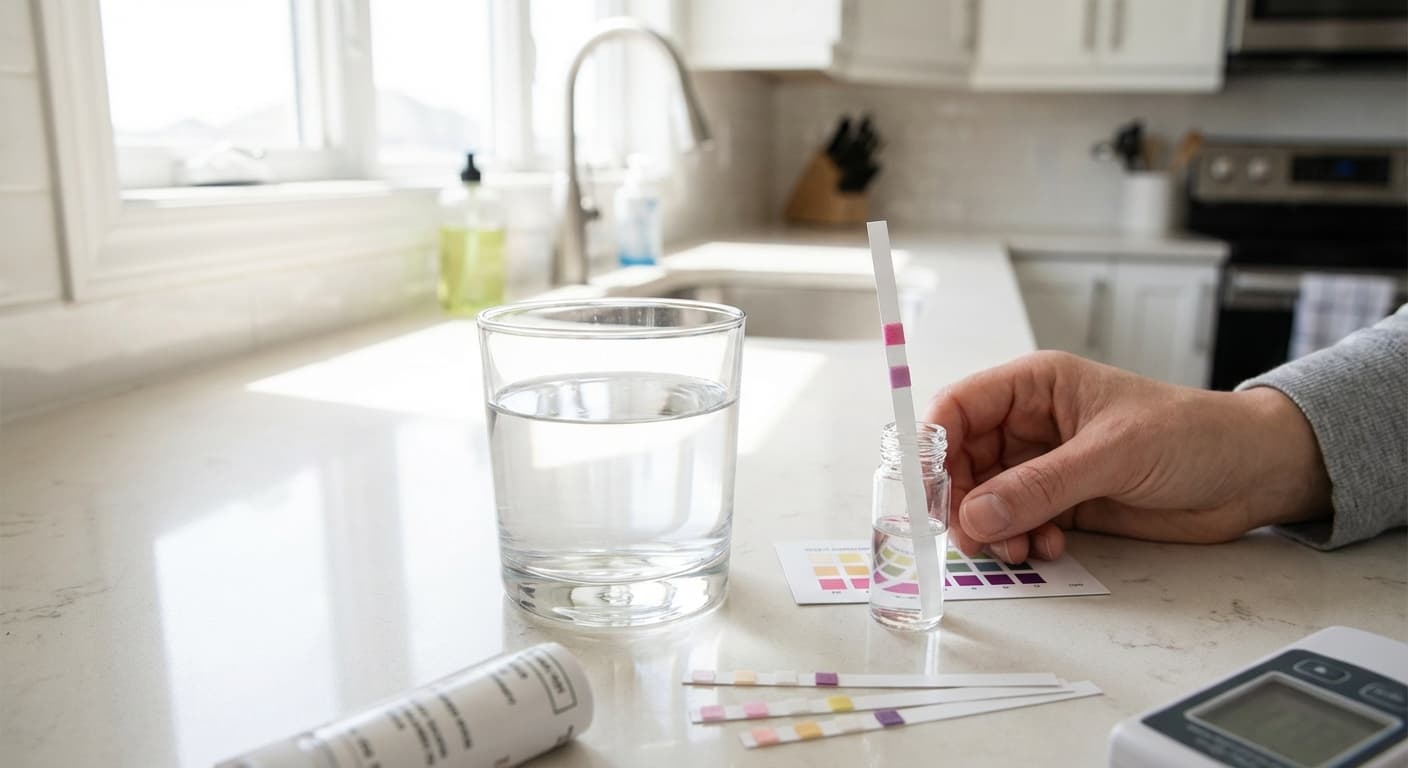
Phoenix tap water is monitored for PFAS under the EPA fifth Unregulated Contaminant Monitoring Rule, which covered 29 compounds from January 2023 through December 2025. The EPA finalized enforceable maximum contaminant levels for PFOA and PFOS at 4 parts per trillion each in April 2024, with a compliance deadline of April 2029. Phoenix Water Services draws most of its supply from the Salt and Verde rivers. Surface water tends to carry lower PFAS concentrations than groundwater systems near former industrial or military sites, which is why neighboring Maricopa County communities recorded higher UCMR5 detections. For households that want drinking water protection before the 2029 deadline, an NSF/ANSI 58-certified reverse osmosis system at the kitchen tap is the most reliable point-of-use option for reducing PFOA, PFOS, and other PFAS. Verify current Phoenix water data at phoenix.gov/waterservices and through the EPA UCMR5 Data Finder at epa.gov/dwucmr before making treatment decisions.
What is PFAS and why does Phoenix water carry it?
PFAS stands for per- and polyfluoroalkyl substances, a class of thousands of synthetic chemicals manufactured since the 1940s. The carbon-fluorine bond at the core of every PFAS molecule is one of the strongest in organic chemistry. That stability made PFAS industrially useful: it resists heat, water, oil, and degradation. It also means PFAS compounds do not break down in the environment, in soil, in water supplies, or in the human body once ingested. Health research has documented associations between PFAS exposure and immune system effects, thyroid disruption, elevated cholesterol, and certain cancers at high concentrations, according to the EPA April 2024 rulemaking at epa.gov/sdwa/and-polyfluoroalkyl-substances-pfas. PFOA and PFOS, the two most-studied compounds, were phased out of US manufacturing by the mid-2000s but persist widely in water systems from prior decades of use in fire-suppression foam, non-stick coatings, and food-contact packaging.
What did the 2023 to 2025 UCMR5 monitoring find in Phoenix water?
The EPA fifth Unregulated Contaminant Monitoring Rule ran from January 2023 through December 2025 and required public water systems serving more than 3,300 people to test for 29 PFAS compounds. In Arizona, 57 drinking-water utilities reported at least one PFAS detection at or above the EPA minimum reporting level. Of those, 27 utilities exceeded the final federal MCL for PFOA or PFOS, serving roughly 1.74 million residents, per analysis of the UCMR5 dataset published at mapscaping.com. Phoenix Water Services publishes PFAS monitoring results in its annual Consumer Confidence Report at phoenix.gov/waterservices. The City of Phoenix draws between 97 and 99 percent of its supply from surface sources, primarily the Salt River and Verde River systems. For system-level Phoenix results, use the EPA UCMR5 Data Finder at epa.gov/dwucmr, filtering by the City of Phoenix water system name.
What the EPA April 2024 MCL rule means for Phoenix tap water
In April 2024, the EPA finalized the first enforceable national Maximum Contaminant Levels for PFAS in drinking water. The rule sets limits for six PFAS: PFOA at 4 parts per trillion, PFOS at 4 ppt, HFPO-DA (GenX chemicals) at 10 ppt, PFNA at 10 ppt, PFHxS at 10 ppt, and a Hazard Index that applies when multiple PFAS compounds are present together. The full rule is at epa.gov/sdwa/and-polyfluoroalkyl-substances-pfas. Water utilities have until April 2029 to achieve compliance. During the compliance period, tap water at utilities still upgrading may legally contain PFAS above the new limits. A household reverse osmosis system at the kitchen tap provides PFAS reduction without waiting for upstream infrastructure upgrades.
How does Phoenix PFAS compare to neighboring Maricopa County communities?
Phoenix Water Services draws predominantly from surface reservoirs fed by the Salt and Verde rivers. Several Maricopa County utilities that rely more heavily on groundwater recorded UCMR5 detections above the new 4 ppt federal MCL. Tempe recorded PFOS at 55.80 nanograms per liter and PFOA at 38.70 ng/L in January 2025 samples, more than thirteen times the federal limit, per data compiled at waterutilityreport.com. Gilbert recorded PFOS at 9.80 ng/L and PFOA at 6.50 ng/L. Peoria had PFOA detections at 5.60 ng/L. All three readings exceed the 4 ppt MCL that takes effect for compliance in 2029. Phoenix homeowners should still verify their current CCR data, as Phoenix water does carry detectable PFAS compounds.
What PFAS in drinking water means for cooking, drinking, and baby formula
PFAS exposure through drinking water occurs when tap water is consumed directly, used to prepare food, or used to mix infant formula. Boiling water does not remove PFAS. Because PFAS compounds are non-volatile, they do not evaporate when heated. Boiling actually concentrates PFAS in the remaining water as volume reduces. Households using Phoenix tap water for soups, coffee, tea, pasta, or rice are using the same PFAS concentration as tap water directly. A kitchen-tap reverse osmosis system addresses these exposure pathways. The RO membrane stage removes PFOA, PFOS, and other PFAS. Water from the RO tap is suitable for formula mixing and cooking. A refrigerator line extension from the RO supply ensures ice cubes carry the same PFAS reduction.
What water treatment removes PFAS at the kitchen tap?
Three treatment technologies are documented by the EPA and NSF International to reduce PFAS: reverse osmosis, granular activated carbon at high contact time, and ion exchange resin. For residential point-of-use installation, reverse osmosis is the most practical. NSF/ANSI Standard 58-certified RO systems greatly reduce PFOA, PFOS, and other PFAS according to EPA guidance at epa.gov/water-research/identifying-drinking-water-filters-certified-reduce-pfas. Standard granular carbon in residential under-sink cartridges has insufficient contact time for reliable PFAS reduction. Water softeners exchange calcium and magnesium for sodium and have no effect on PFAS. For complete Phoenix tap water treatment, the recommended stack is a whole-home catalytic carbon filter for chloramine, an ion exchange softener for the 12 to 22 GPG hardness load, and an NSF/ANSI 58-certified RO system at the kitchen tap for PFAS, arsenic, fluoride, and dissolved solids.
How do I check my Phoenix water's current PFAS levels?
The City of Phoenix publishes an annual Consumer Confidence Report at phoenix.gov/waterservices each July, covering the prior calendar year's contaminant data including PFAS monitoring. The EPA UCMR5 Data Finder at epa.gov/dwucmr lists system-level PFAS detections searchable by water utility name. The Arizona Department of Environmental Quality maintains a statewide PFAS database at azdeq.gov covering utility detections and site-specific investigations near AFFF use locations, most relevant for private well owners near Luke Air Force Base or Phoenix Sky Harbor. For in-home measurement of your specific tap water rather than system-wide averages, Aqua Wellness provides free on-site water testing before recommending any treatment system. Call (928) 451-1591 or book online to schedule.
Frequently asked questions
- Does Phoenix tap water have PFAS?
- Yes. Phoenix Water Services monitored for 29 PFAS compounds under EPA UCMR5 from January 2023 through December 2025. Phoenix draws primarily from the Salt and Verde rivers, which tend to carry lower PFAS concentrations than groundwater systems near former industrial or military sites. Review current results at phoenix.gov/waterservices or via the EPA UCMR5 Data Finder at epa.gov.
- What is the EPA legal limit for PFAS in drinking water?
- The EPA finalized Maximum Contaminant Levels in April 2024. PFOA and PFOS are each limited to 4 parts per trillion. HFPO-DA (GenX) is set at 10 ppt. PFNA and PFHxS each carry individual limits. Water utilities must comply by April 2029. The full rule is at epa.gov/sdwa/and-polyfluoroalkyl-substances-pfas.
- Does a standard pitcher filter remove PFAS from Phoenix water?
- Most pitcher filters are not certified for PFAS reduction. Only filters certified to NSF/ANSI Standard 58 (reverse osmosis) or Standard 53 with a specific PFAS claim have verified removal data. Standard carbon block pitchers reduce chlorine and improve taste but are not effective for PFAS. Verify certification before purchase.
- What water filter removes PFAS from Phoenix tap water?
- Reverse osmosis systems certified to NSF/ANSI Standard 58 greatly reduce PFOA, PFOS, and other PFAS according to EPA guidance at epa.gov. Granular activated carbon at high contact time also reduces PFAS but performs less reliably in residential under-sink cartridges. Standard water softeners do not remove PFAS.
- When do Phoenix water utilities have to comply with the new PFAS limits?
- Water utilities nationwide have until April 2029 to achieve compliance with the EPA April 2024 PFAS MCLs. During the compliance window, tap water at some utilities may legally contain PFAS above the new limits. A household reverse osmosis system provides protection at the kitchen tap without waiting for utility upgrades.
- How can I check PFAS levels in my Phoenix tap water?
- Three sources cover Phoenix PFAS data: the City of Phoenix annual Consumer Confidence Report at phoenix.gov/waterservices, the ADEQ monitoring database at azdeq.gov, and the EPA UCMR5 Data Finder at epa.gov. For in-home measurement, Aqua Wellness offers a free water test at your tap. Call (928) 451-1591 to schedule.